
'%3e%3cpath%20d='M15.1003%2043.5001C33.2091%2043.5001%2043.1166%2028.4935%2043.1166%2015.4838C43.1166%2015.062%2043.1072%2014.6307%2043.0884%2014.2088C45.0157%2012.815%2046.679%2011.0886%2048%209.11072C46.205%209.90932%2044.2993%2010.4309%2042.3478%2010.6576C44.4026%209.42594%2045.9411%207.49107%2046.6781%205.21166C44.7451%206.35724%2042.6312%207.16535%2040.4269%207.60134C38.9417%206.02324%2036.978%204.97835%2034.8394%204.62822C32.7008%204.27809%2030.5064%204.64222%2028.5955%205.66431C26.6846%206.68641%2025.1636%208.30953%2024.2677%2010.2827C23.3718%2012.256%2023.1509%2014.4694%2023.6391%2016.5807C19.725%2016.3843%2015.8959%2015.3675%2012.4%2013.5963C8.90405%2011.8251%205.81939%209.339%203.34594%206.29916C2.0888%208.46661%201.70411%2011.0314%202.27006%2013.4723C2.83601%2015.9132%204.31013%2018.047%206.39281%2019.4401C4.82926%2019.3905%203.29995%2018.9695%201.93125%2018.212V18.3338C1.92985%2020.6084%202.7162%2022.8133%204.15662%2024.5737C5.59704%2026.334%207.60265%2027.5412%209.8325%2027.9901C8.38411%2028.3864%206.86396%2028.4441%205.38969%2028.1588C6.01891%2030.115%207.24315%2031.8259%208.89154%2033.0528C10.5399%2034.2797%2012.5302%2034.9613%2014.5847%2035.0026C11.0968%2037.7423%206.78835%2039.2284%202.35313%2039.2213C1.56657%2039.2201%200.780798%2039.1719%200%2039.077C4.50571%2041.9676%209.74706%2043.5029%2015.1003%2043.5001Z'%20fill='%23F7F7F7'/%3e%3c/g%3e%3cdefs%3e%3cclipPath%20id='clip0'%3e%3crect%20width='48'%20height='48'%20fill='white'/%3e%3c/clipPath%3e%3c/defs%3e%3c/svg%3e)


Whether you sell custom furniture, personalized jewelry, or configurable industrial components, today's customers expect more than a static product page. They want to see exactly what they are buying before they commit. A product configurator makes that possible — and in 2026, it has become one of the most important tools in the e-commerce and manufacturing technology stack. The global product configurator market was valued at $3.76 billion in 2024 and is projected to grow at a CAGR of 11.3%, reaching $7.15 billion by 2030. Those numbers reflect a fundamental shift in how businesses sell complex and customizable products. This guide breaks down everything you need to know — what product configurators are, how they work, and how to choose the right one for your business.
What Is a Product Configurator?
A product configurator is an interactive software tool that allows customers, sales teams, or designers to customize a product by selecting from a set of predefined options — dimensions, materials, colors, components, and features — while seeing the result update in real time. Think of it as a guided design experience. Instead of browsing through a catalog of fixed SKUs, a customer can build exactly the product they want within the constraints you define. Behind the scenes, a rules engine ensures that every combination is valid, manufacturable, and correctly priced. The output is not just a pretty picture: modern configurators generate accurate Bills of Materials (BOMs), production-ready CAD files, and instant price quotes, bridging the gap between what a customer wants and what the factory floor needs.
Types of Product Configurators
Not all configurators are built the same. The right type depends on your product complexity, customer expectations, and manufacturing workflow. There are three main categories.
2D Configurators present products as flat images or layered compositions. A customer might pick a fabric swatch and see it applied to a sofa silhouette, or select an engraving font for a phone case. These are lightweight, fast to load, and well-suited for products where visual depth is not critical — think print-on-demand items, simple apparel, or stationery.
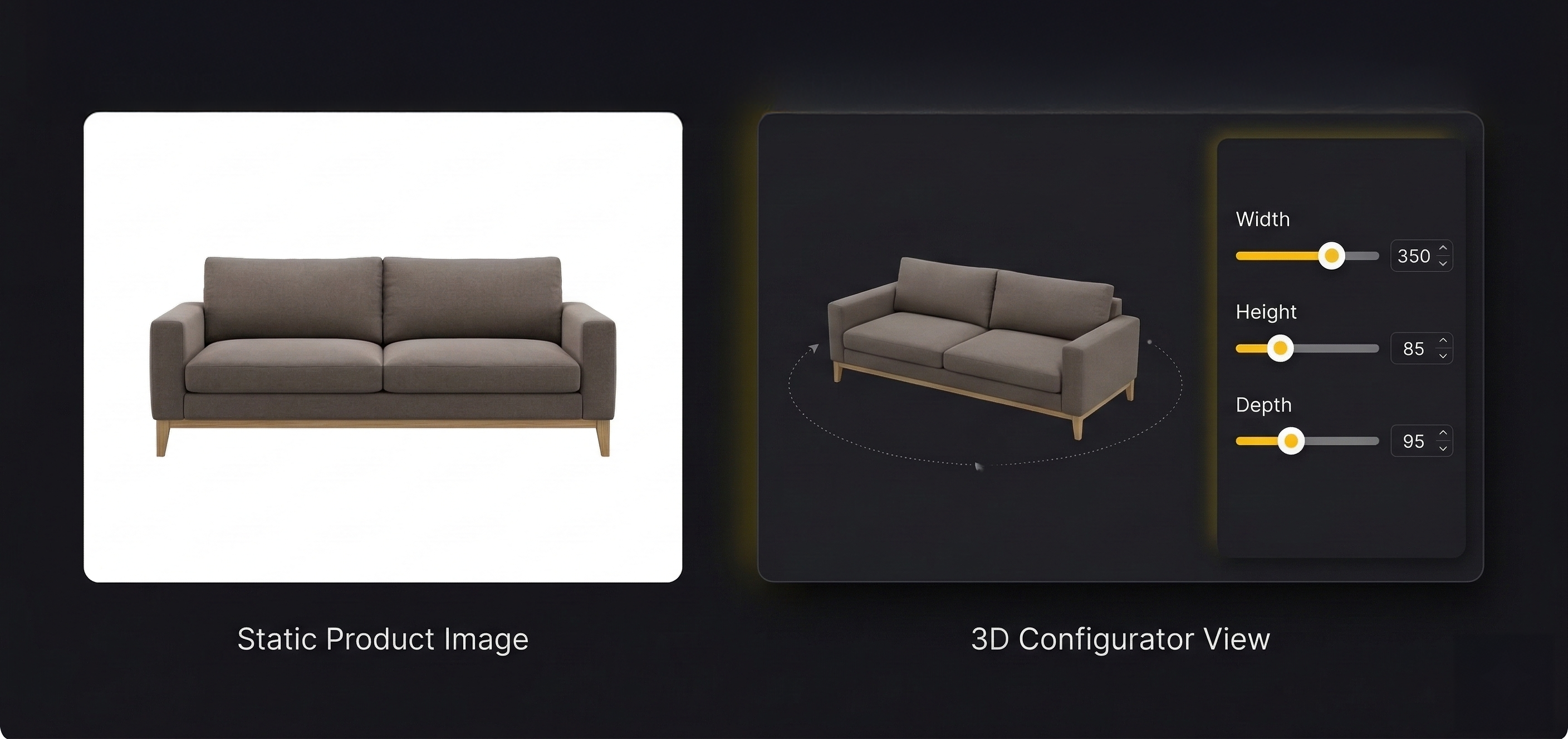
3D Configurators render the product as a fully interactive three-dimensional model. Customers can orbit, zoom, and inspect the product from every angle while changing materials, colors, and components. For industries like furniture, jewelry, and doors and windows, where the tactile feel and spatial relationships matter, 3D configurators provide the confidence that flat images simply cannot match.
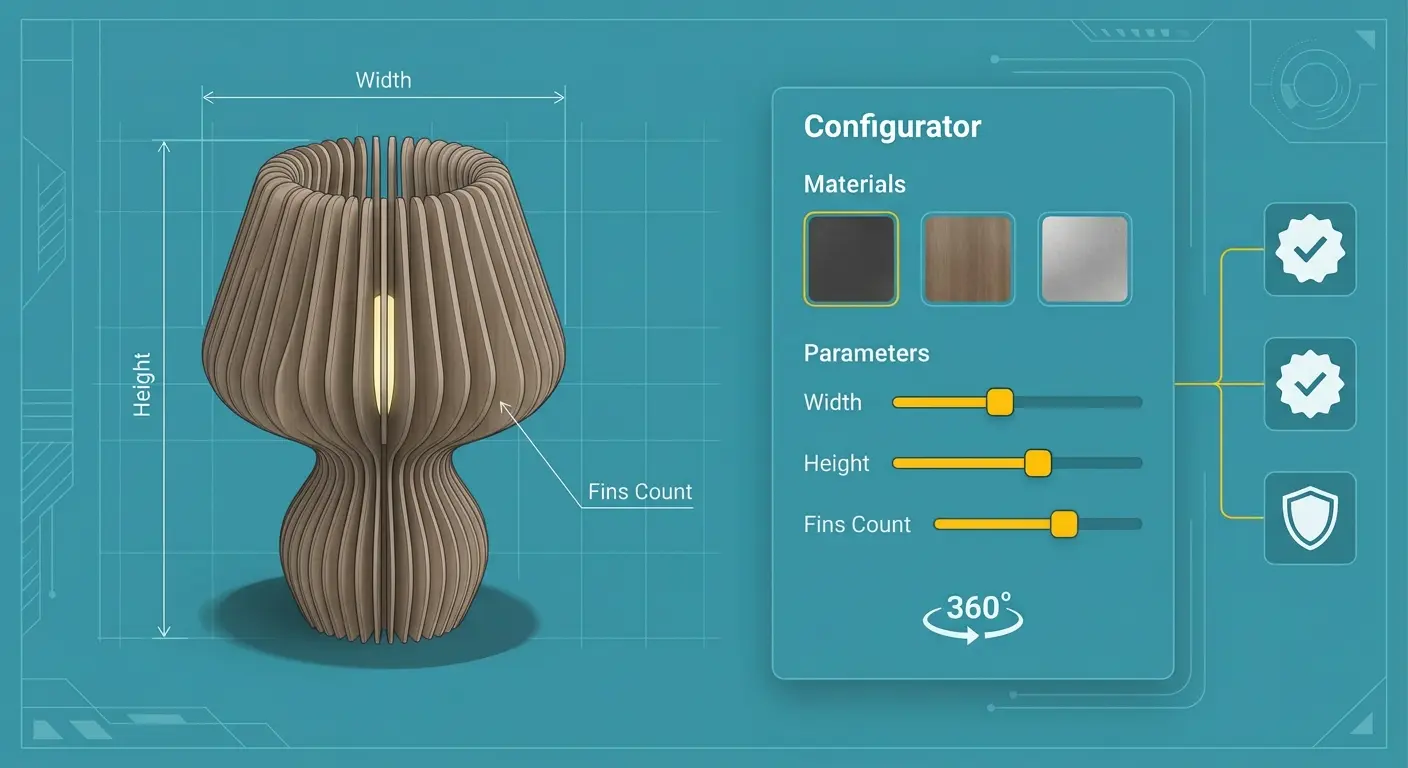
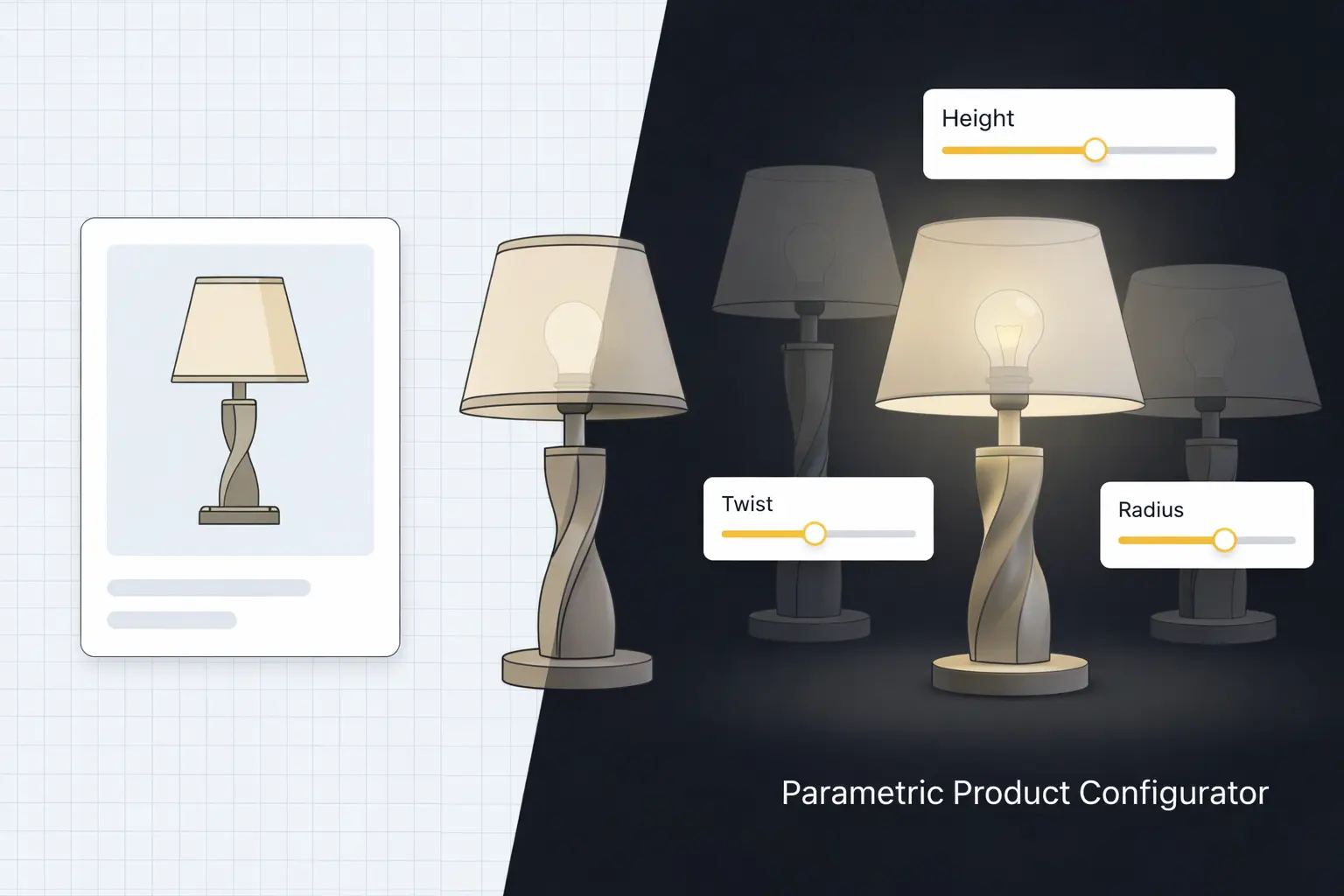
Parametric Configurators go one step further. Instead of swapping between preset options, they let customers modify the actual geometry of the product — adjusting height, width, curvature, spacing, or any other dimension. This is the approach used by Configurator.tech, powered by BeeGraphy's parametric engine. It is especially powerful for made-to-measure products such as staircases, 3D-printed objects, and custom souvenirs and promotional items. For a deeper dive into how these types compare, read our guide on 2D vs 3D configurators for product customization.
Key Features That Define a Modern Configurator
A product configurator is only as useful as the features behind it. Here are the capabilities that separate a genuinely effective configurator from a glorified dropdown menu.
Real-Time Visualization. As a customer changes a parameter — say, switching from oak to walnut on a shelving unit — the 3D model updates instantly. No page reloads, no waiting. This immediate feedback loop is what drives engagement and confidence. Research from Threekit shows that products with 3D configurators see up to a 94% increase in conversion rates.
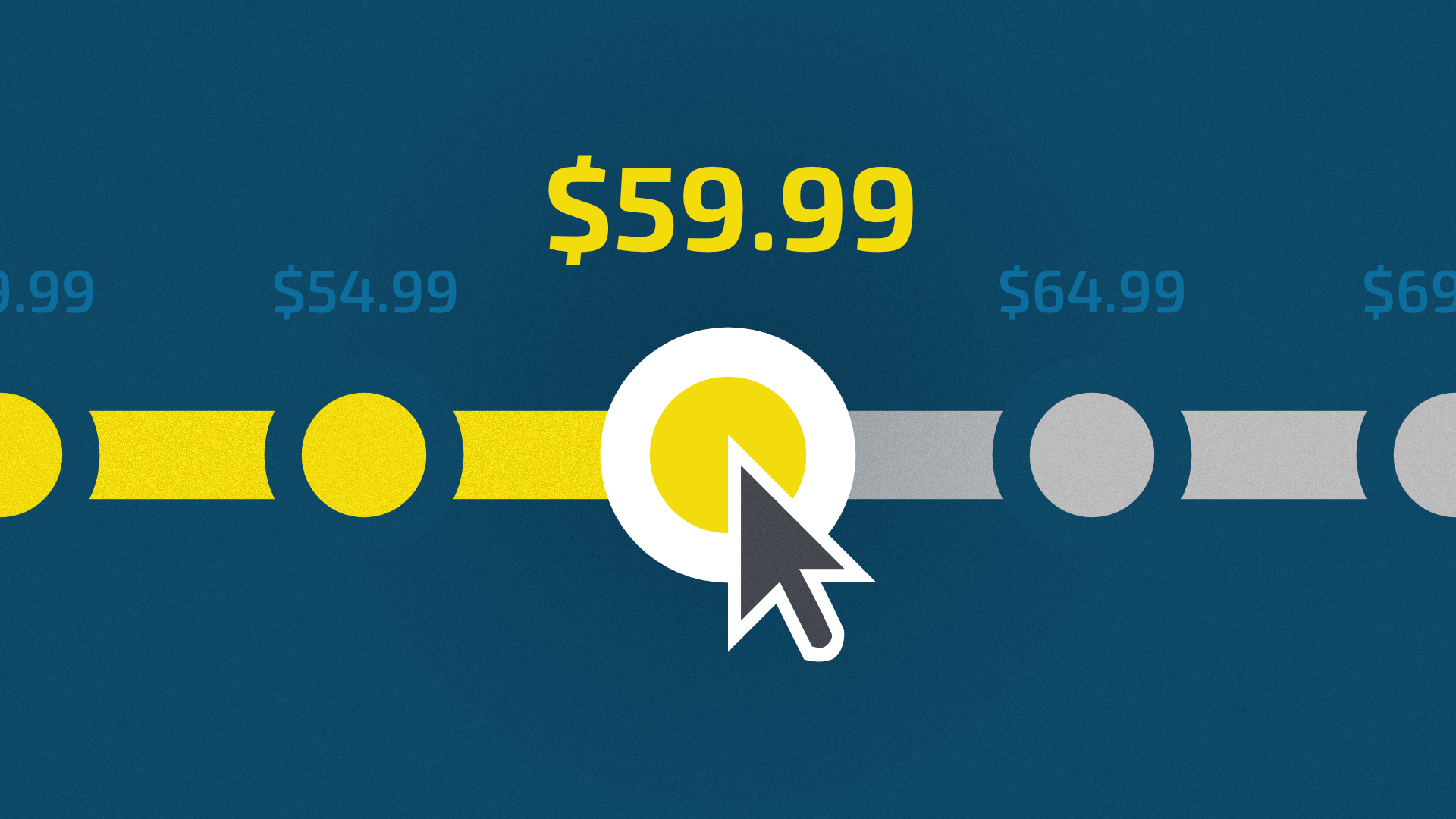
Dynamic Pricing. Every option the customer selects adjusts the price in real time. Whether it is a premium material upcharge, a size-based cost adjustment, or a volume discount, the customer always knows exactly what they will pay. This transparency eliminates sticker shock and accelerates the purchase decision — especially critical in B2B contexts where manual quoting can take days or weeks.
Rules Engine. This is the intelligence behind the configurator. A rules engine enforces dependencies and constraints — for example, ensuring that a door frame width is compatible with a selected glass panel type, or that a ring setting can only hold certain gemstone cuts. It prevents invalid configurations from ever reaching production, eliminating costly errors.
BOM and Manufacturing Output. The best configurators do not stop at the storefront. They automatically generate detailed Bills of Materials, cut lists, assembly instructions, and production-ready files that flow directly into your manufacturing pipeline. This is what transforms a configurator from a sales tool into an operational backbone.
Who Uses Product Configurators?
The short answer: any business that sells products with meaningful variation. According to Data Horizon Research, B2B applications of product configurators have grown by 45% since 2021, with manufacturing accounting for roughly 40% of the total market share. But configurators are equally transformative on the consumer side. Here are the industries where they deliver the most impact.
Furniture. Customers design sofas, tables, and storage units by choosing dimensions, upholstery, leg styles, and finishes. A configurator replaces the guesswork with a photorealistic preview. Explore our furniture configurator solutions.
Jewelry. Rings, bracelets, and necklaces are deeply personal purchases. Configurators let buyers select metals, gemstones, settings, and engravings while seeing the finished piece in 3D. See our jewelry configurator solutions.
Doors and Windows. With dozens of size, material, glazing, and hardware combinations, the fenestration industry benefits enormously from guided configuration that prevents incompatible selections. Learn more about our door and window configurators.
3D Printing. Parametric configurators are a natural fit for additive manufacturing, where every product can be unique. Customers adjust geometry parameters and the configurator outputs a print-ready file. See our 3D printing configurator solutions.
Souvenirs and Promotional Products. From branded corporate gifts to personalized tourist keepsakes, configurators let buyers add logos, text, and design elements to products in real time. Explore our souvenir and advertising configurators.
Staircases. Custom staircases involve complex dimensional relationships between treads, risers, railings, and landings. A parametric configurator handles these constraints automatically while producing manufacturing-ready outputs. See our staircase configurator solutions.
The Business Case: Why Configurators Drive Results
The data makes a compelling argument. According to Epsilon Research, 80% of consumers are more likely to purchase when brands offer personalized experiences. Product configurators are the most direct way to deliver that personalization at scale.
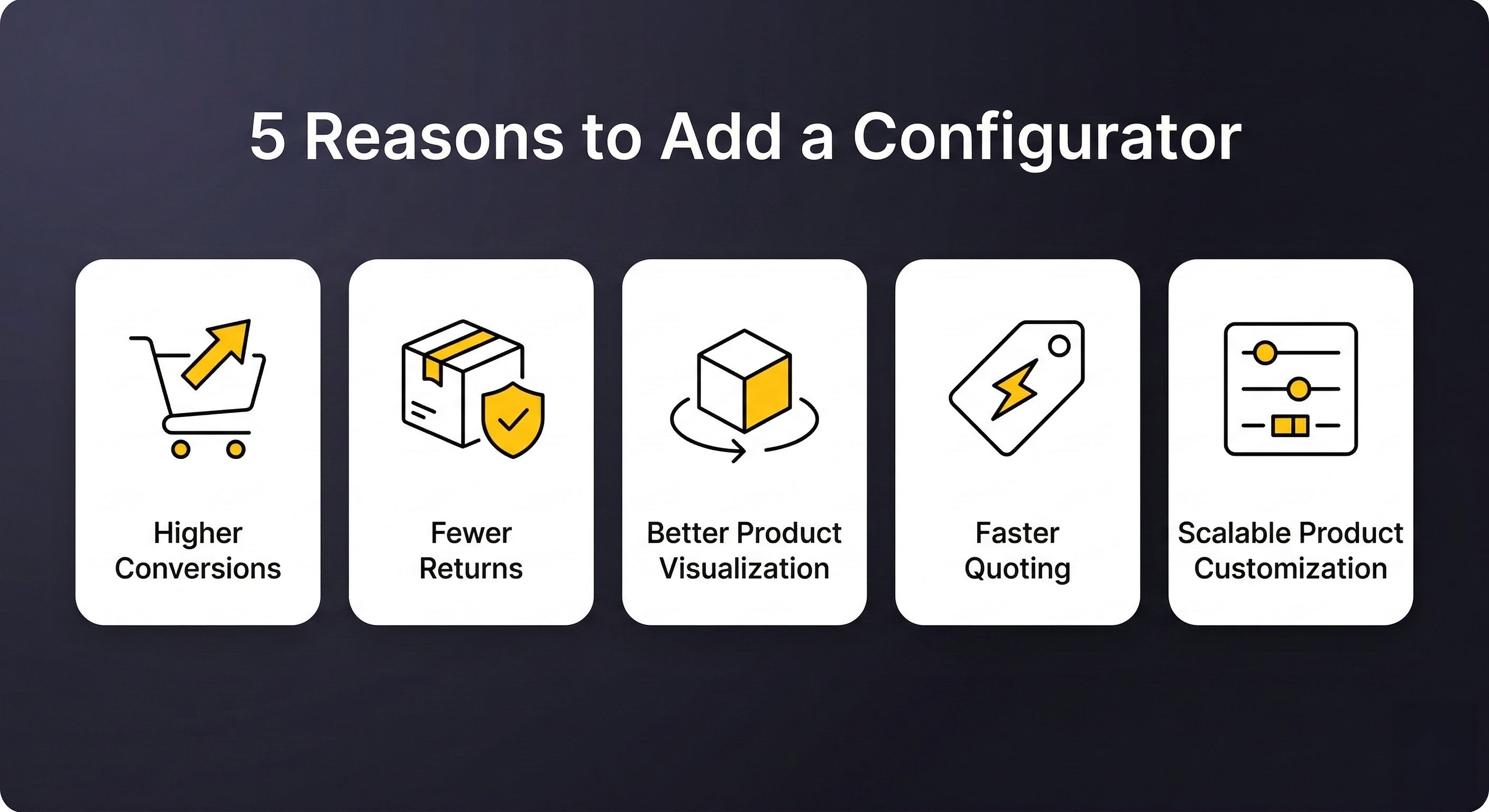
Higher Conversion Rates. Interactive 3D experiences keep customers engaged longer and give them confidence in what they are ordering. Businesses using configurators consistently report significant lifts in conversion — some as high as 94% according to Threekit's data.
Reduced Returns. When customers see exactly what they are getting — in the right dimensions, the right color, the right material — they are far less likely to return the product. BeeGraphy reports a 35% reduction in returns for businesses using their configurator platform. If your business is dealing with high return rates on personalized products, our guide on reducing returns on personalized products covers proven strategies.
Operational Efficiency. By automating the quote-to-production pipeline, configurators eliminate manual data entry, reduce miscommunication between sales and manufacturing, and shorten lead times. For a deeper look at the full range of advantages, read our article on reasons to add a product configurator to your website.
Revenue Growth. BeeGraphy configurators drive 2.5x more sales compared to traditional product pages. When customers can build exactly what they want and see it in real time, average order values increase and purchase frequency improves.
How Configurator.tech Fits In
Configurator.tech, powered by BeeGraphy, is built specifically for businesses that need more than a simple option picker. At its core is a parametric engine — the same technology used in computational design and engineering — that generates real geometry on the fly based on customer inputs. This is not pre-rendered image swapping. Every configuration produces an actual 3D model with accurate dimensions and material properties.
The platform is designed to be no-code and low-code. Designers and product managers can create and manage configurable products without writing software. Models are built using BeeGraphy's visual parametric environment, defining the parameters, constraints, and rules that govern how the product can be customized.
Embedding is straightforward. Configurator.tech works with any frontend framework, e-commerce platform, or internal tool. Whether you are running a Shopify store, a custom React application, or an internal sales portal, the configurator drops in as an embeddable component with a fully customizable UI.
The design-to-fabrication pipeline is where Configurator.tech truly differentiates itself. Every configuration automatically generates production-ready outputs — BOMs, 2D cut sheets, 3D manufacturing files, and instant price calculations. There is no manual translation step between what the customer designed and what the factory needs to build. This end-to-end automation is what makes it possible to offer mass customization without the operational overhead that typically comes with it.
Getting Started
If you are evaluating product configurators for your business, start with the fundamentals. Identify which products have the highest customization demand and the most complex quoting process — those are where a configurator will deliver the fastest ROI.
Browse our library of prebuilt configurator templates to see what is possible out of the box. These industry-specific templates cover furniture, jewelry, doors, staircases, and more, and can be customized to match your brand and product catalog.
Review our pricing plans to find the tier that fits your business size and volume. Configurator.tech offers transparent, predictable pricing — no hidden fees or per-seat charges that scale unpredictably.
When you are ready to go deeper, get in touch with our team for a free consultation. We will walk you through how the platform works with your specific products, your existing tech stack, and your manufacturing workflow. The product configurator is no longer a nice-to-have — it is the infrastructure layer that connects your customers to your production floor. The businesses that adopt it now will set the standard for how customizable products are sold in 2026 and beyond.