
'%3e%3cpath%20d='M15.1003%2043.5001C33.2091%2043.5001%2043.1166%2028.4935%2043.1166%2015.4838C43.1166%2015.062%2043.1072%2014.6307%2043.0884%2014.2088C45.0157%2012.815%2046.679%2011.0886%2048%209.11072C46.205%209.90932%2044.2993%2010.4309%2042.3478%2010.6576C44.4026%209.42594%2045.9411%207.49107%2046.6781%205.21166C44.7451%206.35724%2042.6312%207.16535%2040.4269%207.60134C38.9417%206.02324%2036.978%204.97835%2034.8394%204.62822C32.7008%204.27809%2030.5064%204.64222%2028.5955%205.66431C26.6846%206.68641%2025.1636%208.30953%2024.2677%2010.2827C23.3718%2012.256%2023.1509%2014.4694%2023.6391%2016.5807C19.725%2016.3843%2015.8959%2015.3675%2012.4%2013.5963C8.90405%2011.8251%205.81939%209.339%203.34594%206.29916C2.0888%208.46661%201.70411%2011.0314%202.27006%2013.4723C2.83601%2015.9132%204.31013%2018.047%206.39281%2019.4401C4.82926%2019.3905%203.29995%2018.9695%201.93125%2018.212V18.3338C1.92985%2020.6084%202.7162%2022.8133%204.15662%2024.5737C5.59704%2026.334%207.60265%2027.5412%209.8325%2027.9901C8.38411%2028.3864%206.86396%2028.4441%205.38969%2028.1588C6.01891%2030.115%207.24315%2031.8259%208.89154%2033.0528C10.5399%2034.2797%2012.5302%2034.9613%2014.5847%2035.0026C11.0968%2037.7423%206.78835%2039.2284%202.35313%2039.2213C1.56657%2039.2201%200.780798%2039.1719%200%2039.077C4.50571%2041.9676%209.74706%2043.5029%2015.1003%2043.5001Z'%20fill='%23F7F7F7'/%3e%3c/g%3e%3cdefs%3e%3cclipPath%20id='clip0'%3e%3crect%20width='48'%20height='48'%20fill='white'/%3e%3c/clipPath%3e%3c/defs%3e%3c/svg%3e)


The furniture industry is undergoing a dramatic transformation. Consumers no longer want to choose from a fixed catalogue of styles and hope for the best. They want to specify the exact wood species, pick the finish, set the dimensions to the centimetre, and see a photorealistic preview before they commit. For furniture brands, meeting that demand is now a competitive requirement, and the tool making it possible is the product configurator.
This guide walks through why configurators matter specifically for custom furniture, what they do under the hood, and how they connect the customer's living-room vision to the factory's cut list without manual re-entry or guesswork.
The Custom Furniture Boom
Personalisation has moved from a niche luxury to a mainstream expectation. According to Straits Research, the global custom furniture market was valued at $35.30 billion in 2024 and is projected to reach approximately $88.08 billion by 2033, growing at a compound annual rate of 12.05%. At the same time, Oberlo reports that global furniture ecommerce hit $283.3 billion in 2024 with a 10.5% annual increase, meaning more of these custom orders are flowing through digital channels than ever before.
Research from Market.us reinforces the trend: 48% of furniture buyers actively seek bespoke pieces, and 38% engage with a configurator before making a purchase. Customers are not only willing to personalise, they expect it. Brands that can deliver a seamless customisation experience capture a rapidly expanding share of the market.
Why Furniture Brands Need Configurators
Furniture is inherently complex to sell online. A single sofa may involve choices across frame material, cushion density, fabric or leather grade, leg style, arm profile, and overall dimensions. Multiply those options and you quickly reach thousands of possible combinations, far too many to photograph individually.
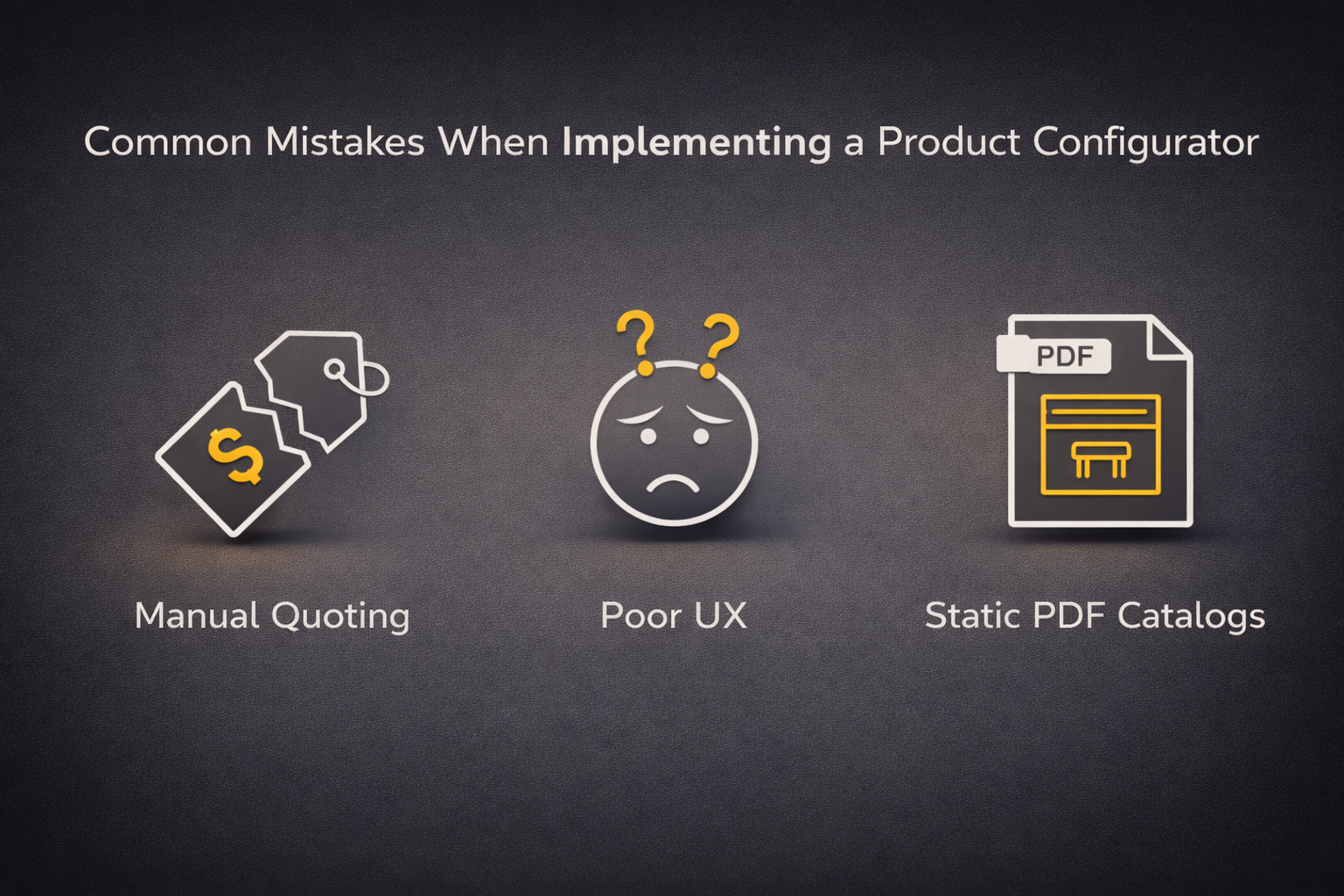
Without an interactive tool, brands rely on static product images and dropdown menus. Customers make their best guess, place the order, and hope it matches the picture in their head. When the piece arrives and the colour reads differently in their living room, or the proportions feel wrong against their wall, they initiate a return. As Threekit reports, "product doesn't look like the photo" is the number-one reason for ecommerce returns. For large, heavy, made-to-order furniture, those returns are especially costly because the item often cannot be resold.
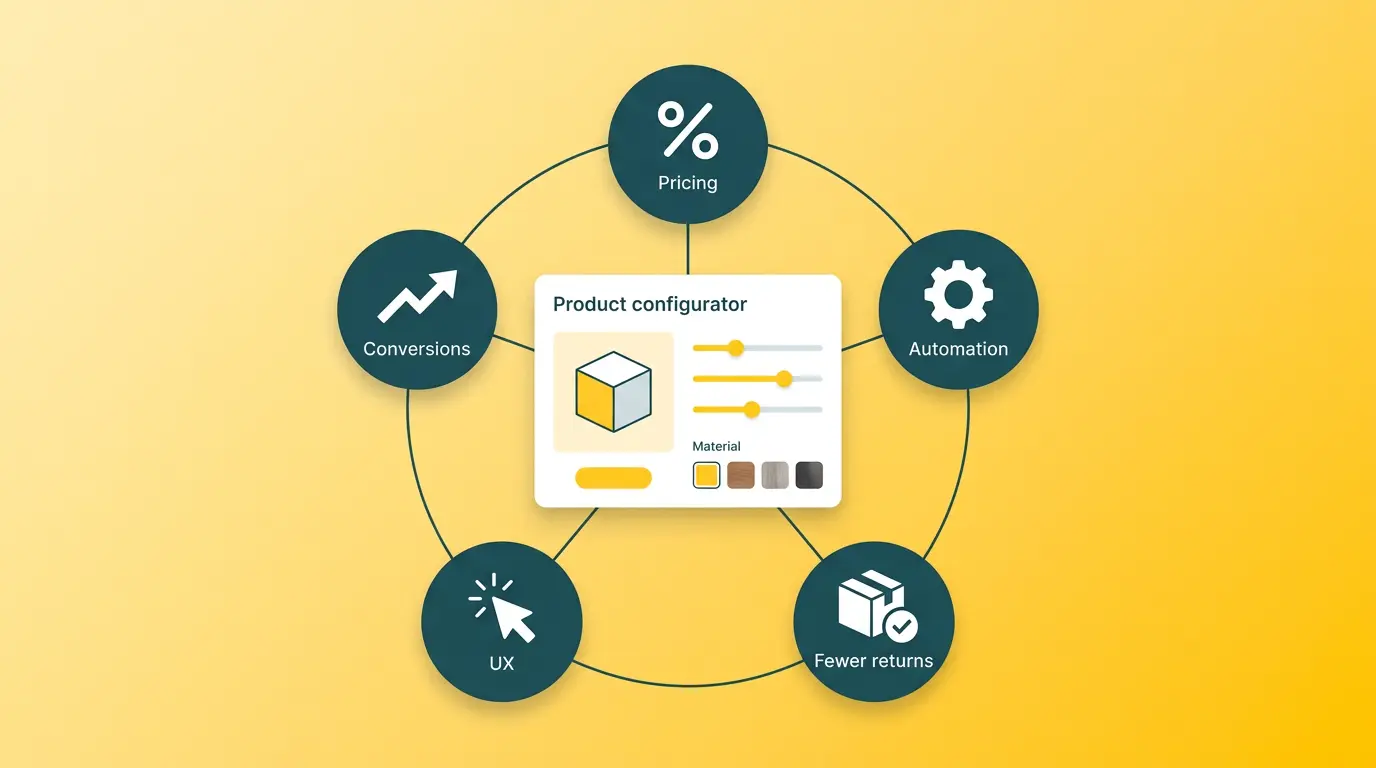
A configurator solves this by replacing guesswork with precision. Every option the customer selects is reflected instantly in a visual preview, price update, and validated against manufacturing constraints. The result: fewer surprises, fewer returns, and higher average order values.
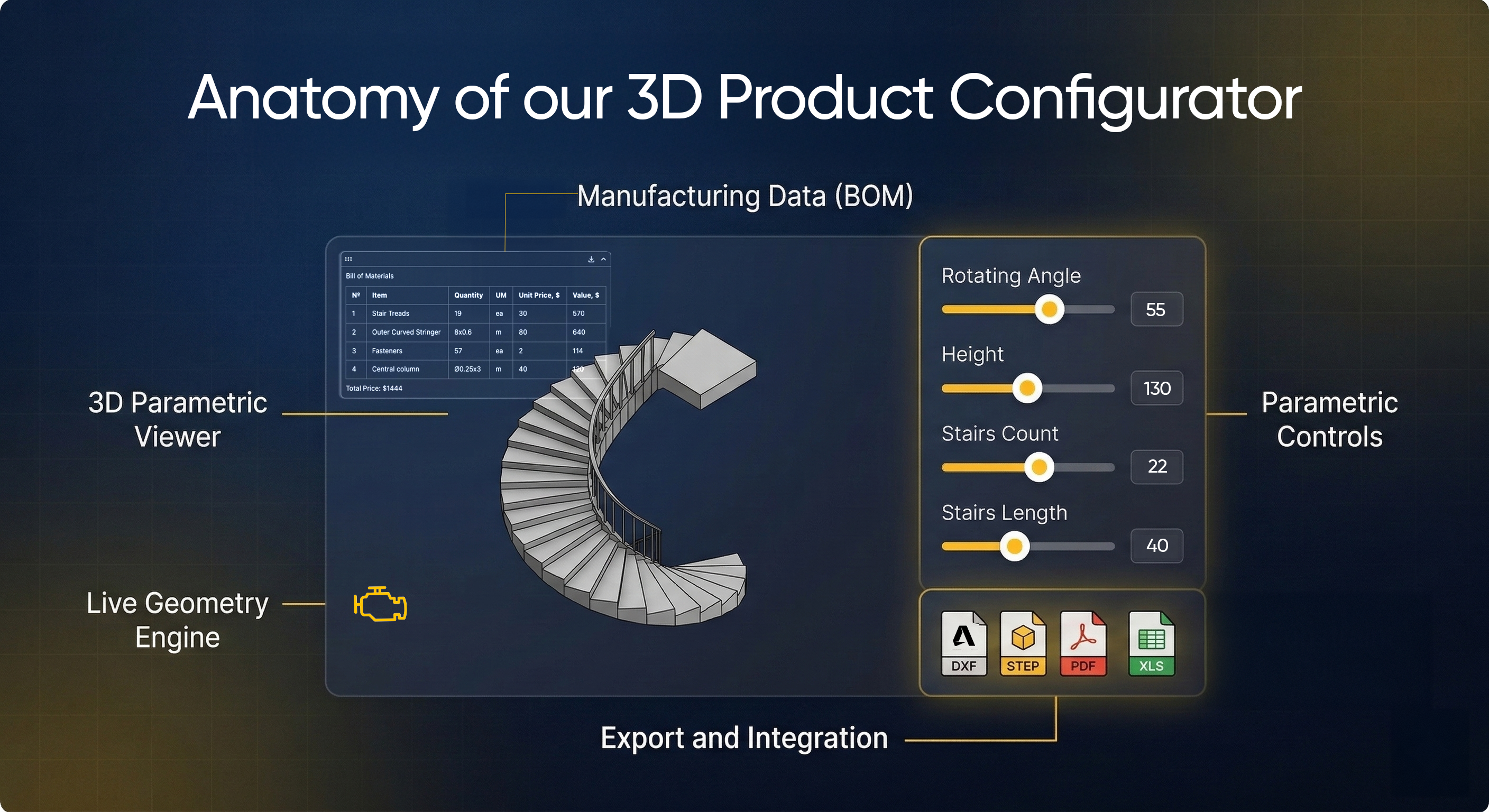
What a Furniture Configurator Actually Does
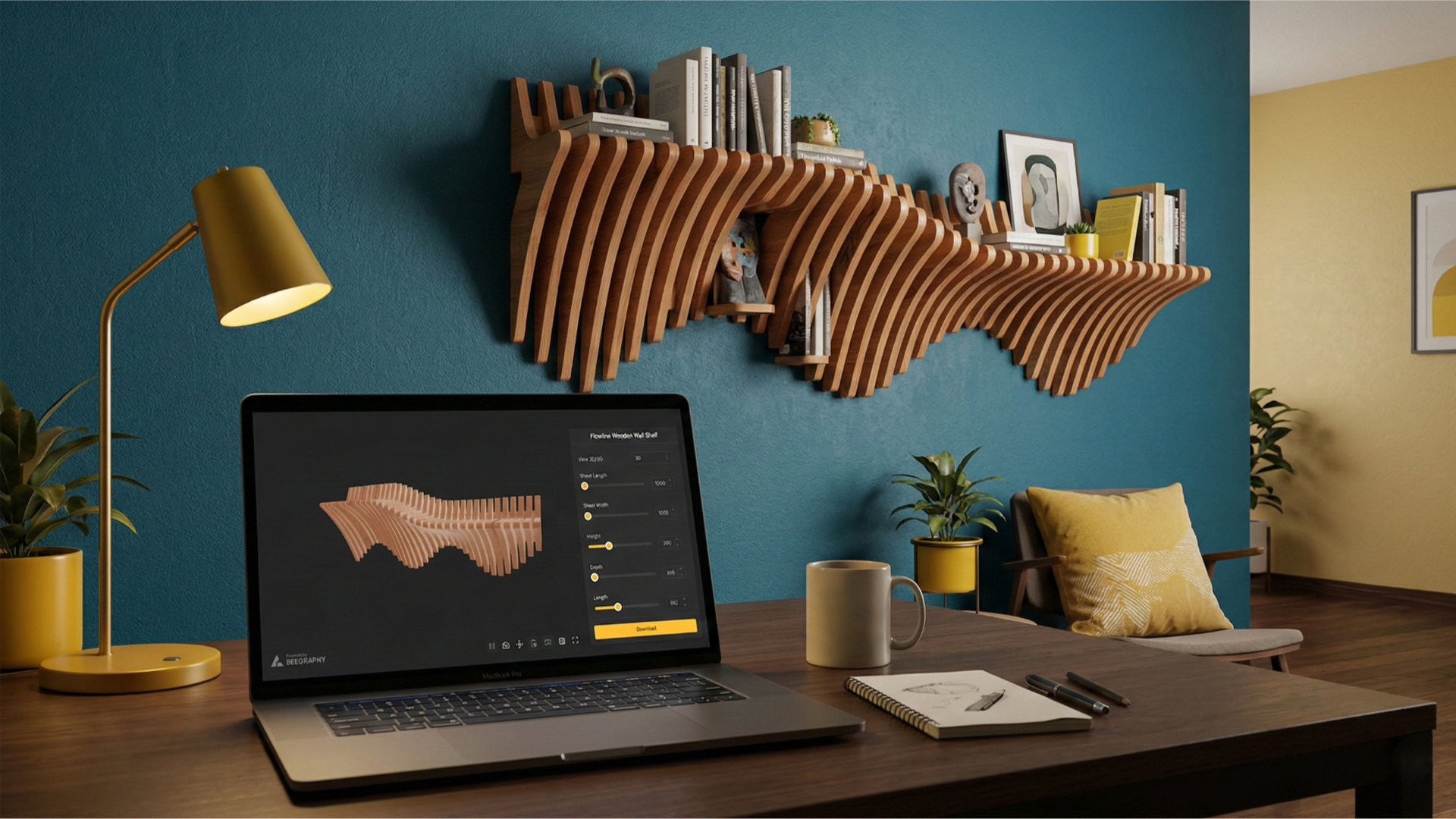
At its core, a furniture configurator is a real-time 3D design tool embedded in your storefront. Customers interact with a photorealistic model of the product and modify it on the fly:
- Material swapping: Toggle between oak, walnut, maple, or painted finishes and see accurate grain and colour rendering instantly.
- Dimension adjustment: Drag sliders or enter values to change width, depth, and height within the manufacturing tolerances you define.
- Component selection: Choose leg styles, hardware, drawer configurations, or upholstery combinations from curated option sets.
- Live pricing: As each change is made, the quoted price updates in real time so customers can balance aesthetics and budget without a separate quoting step.
Built-in rules prevent invalid configurations. A customer cannot select a shelf span wider than the material can support, or pair a finish that is unavailable on a particular wood species. This guided experience keeps every order manufacturable from the start. For a deeper look at what a product configurator is and how it works, see our complete guide.
From Customer Design to Factory Floor
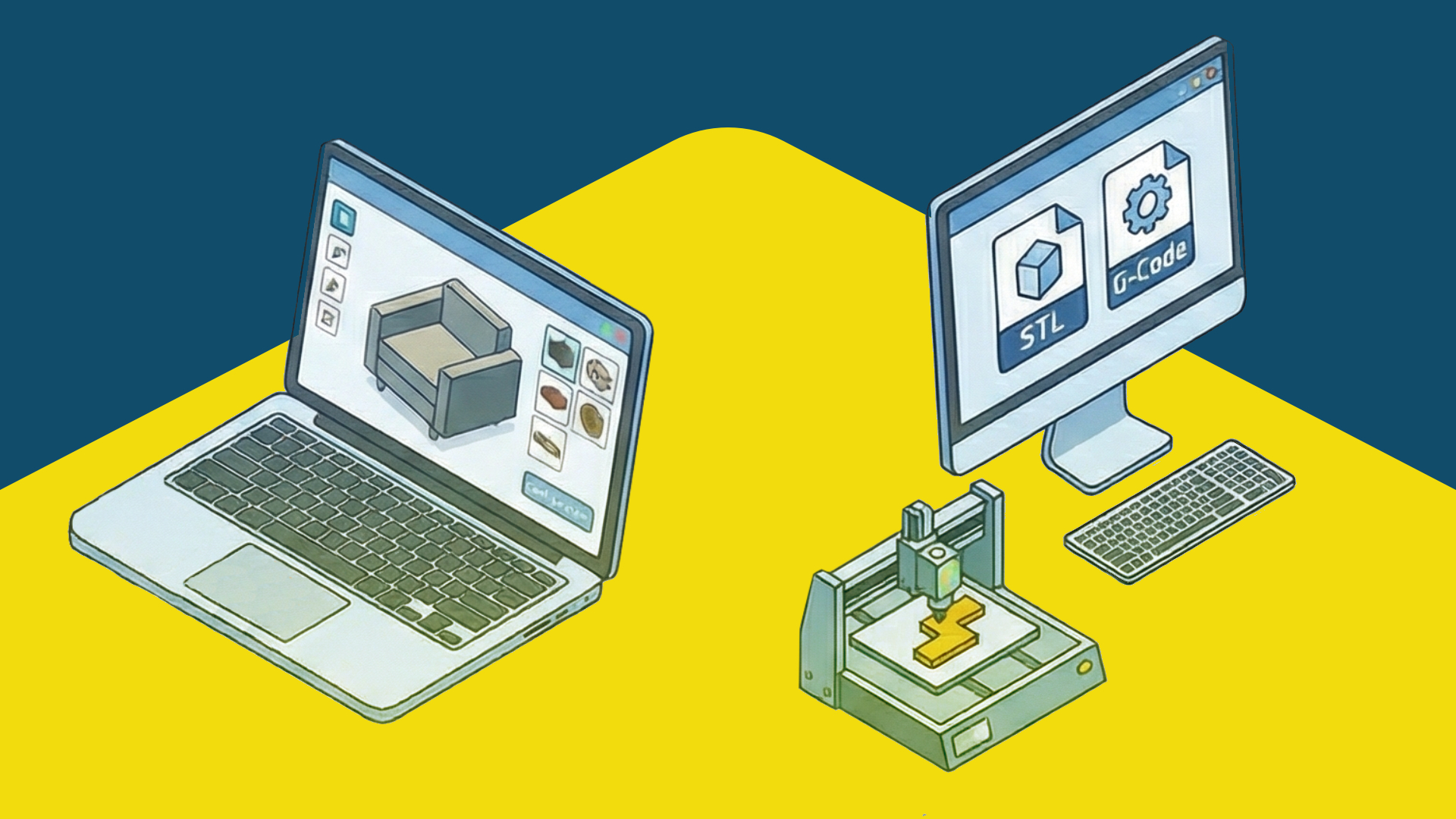
The real power of a modern furniture configurator extends beyond the storefront. Underneath the visual interface sits a parametric model, a set of geometric relationships and formulas that define how the product behaves when dimensions or features change. When a customer finalises their design, the configurator can automatically generate:
- Cut lists: Exact board dimensions, quantities, and grain directions ready for the CNC or panel saw.
- Bills of materials (BOMs): Itemised component lists including hardware, adhesives, and finishing products.
- Production drawings: DXF, PDF, or SVG outputs that go straight to the workshop.
- Pricing breakdowns: Material cost, labour estimates, and margin calculations per order.
This design-to-fabrication pipeline eliminates the manual translation step where an engineer or drafter re-interprets a sales order into shop drawings. Errors drop, lead times shorten, and the customer's intent travels intact from browser to workshop.
Reducing Returns with Visualization
When customers can rotate a 3D model in their browser, zoom into wood grain details, and confirm dimensions against their room layout, confidence at checkout rises sharply. Zolak reports that DFS, one of the UK's largest sofa retailers, saw a 112% increase in conversions after introducing 3D product visualisation. The same research found that 3D configurators reduce furniture returns by 35 to 50 percent.
Threekit cites Home Depot's experience: 35% fewer returns after deploying 3D and 360-degree product views. And BeeGraphy's own data shows a 2.5x improvement in conversion rates alongside a 35% return reduction for brands using parametric configurators. The principle is straightforward: customers who see exactly what they are ordering do not return it because it "looked different online." For more on how product visualization builds trust and how to tackle returns on personalized products, explore our related guides.
How Configurator.tech Serves Furniture Brands
Configurator.tech is built for exactly this workflow. Our platform provides cloud-native, parametric 3D configurators that furniture brands can embed directly on their ecommerce sites. The furniture industry solution includes:
- Prebuilt parametric templates: The BeeGraphy marketplace offers ready-made configurator templates for coffee tables, sideboards, shelving units, desks, and more. Each template is fully parametric, meaning dimensions, materials, and features can be adjusted to match your product line without starting from scratch.
- No-code/low-code setup: Your product team defines rules, constraints, and pricing logic through a visual editor. No 3D programming expertise required.
- Automatic production outputs: Every customer configuration generates cut lists, BOMs, and production-ready drawings that integrate with your existing ERP or workshop management system.
- Real-time pricing: Material costs, labour, and margins update live as the customer designs, so every quote is accurate at checkout.
Whether you manufacture flat-pack furniture or handcrafted solid-wood pieces, the platform adapts to your production method. View pricing details or get in touch to discuss your specific requirements.
Getting Started
Launching a furniture configurator does not require a six-month development cycle. The fastest path is to start from an existing template in the configurator library:
- Choose a template that matches your product category, such as a parametric dining table or modular shelving unit.
- Customise the template with your brand's materials, finish options, dimension ranges, and pricing rules using the visual editor.
- Embed the configurator on your Shopify, WooCommerce, or custom storefront with a single code snippet.
- Connect production by mapping configurator outputs to your workshop's cut-list format or ERP import.
From there, you iterate. Monitor which configurations customers explore most, refine your option sets, and expand into new product lines, all without rebuilding the underlying technology.
The custom furniture market is growing fast, and customers expect to design their pieces in real time. Brands that offer that experience will capture more sales, suffer fewer returns, and streamline their production pipelines. A product configurator is no longer optional for serious furniture businesses. It is the bridge between concept and cut list.
Ready to bring your furniture catalogue to life? Contact Configurator.tech and start building your first configurator today.