
'%3e%3cpath%20d='M15.1003%2043.5001C33.2091%2043.5001%2043.1166%2028.4935%2043.1166%2015.4838C43.1166%2015.062%2043.1072%2014.6307%2043.0884%2014.2088C45.0157%2012.815%2046.679%2011.0886%2048%209.11072C46.205%209.90932%2044.2993%2010.4309%2042.3478%2010.6576C44.4026%209.42594%2045.9411%207.49107%2046.6781%205.21166C44.7451%206.35724%2042.6312%207.16535%2040.4269%207.60134C38.9417%206.02324%2036.978%204.97835%2034.8394%204.62822C32.7008%204.27809%2030.5064%204.64222%2028.5955%205.66431C26.6846%206.68641%2025.1636%208.30953%2024.2677%2010.2827C23.3718%2012.256%2023.1509%2014.4694%2023.6391%2016.5807C19.725%2016.3843%2015.8959%2015.3675%2012.4%2013.5963C8.90405%2011.8251%205.81939%209.339%203.34594%206.29916C2.0888%208.46661%201.70411%2011.0314%202.27006%2013.4723C2.83601%2015.9132%204.31013%2018.047%206.39281%2019.4401C4.82926%2019.3905%203.29995%2018.9695%201.93125%2018.212V18.3338C1.92985%2020.6084%202.7162%2022.8133%204.15662%2024.5737C5.59704%2026.334%207.60265%2027.5412%209.8325%2027.9901C8.38411%2028.3864%206.86396%2028.4441%205.38969%2028.1588C6.01891%2030.115%207.24315%2031.8259%208.89154%2033.0528C10.5399%2034.2797%2012.5302%2034.9613%2014.5847%2035.0026C11.0968%2037.7423%206.78835%2039.2284%202.35313%2039.2213C1.56657%2039.2201%200.780798%2039.1719%200%2039.077C4.50571%2041.9676%209.74706%2043.5029%2015.1003%2043.5001Z'%20fill='%23F7F7F7'/%3e%3c/g%3e%3cdefs%3e%3cclipPath%20id='clip0'%3e%3crect%20width='48'%20height='48'%20fill='white'/%3e%3c/clipPath%3e%3c/defs%3e%3c/svg%3e)


Custom packaging has become a strategic differentiator for brands across every industry. From the unboxing experience that drives social media shares to the branded mailer box that turns shipping into marketing, packaging is no longer an afterthought — it is a core product decision. According to Smithers, the global packaging market reached $1.2 trillion in 2025, with custom and personalised packaging growing at nearly double the rate of standard packaging.
Yet ordering custom packaging remains frustratingly manual. Customers submit dimensions via email, wait for a quote, approve a flat proof, and hope the 3D result matches their mental image. Product configurators eliminate this friction entirely. They let customers design their packaging in real time — selecting dimensions, materials, finishes, and print areas with instant 3D preview and pricing. This guide covers how configurators are transforming the packaging industry from quote-based workflows to self-service design.
Why Packaging Needs Configurators
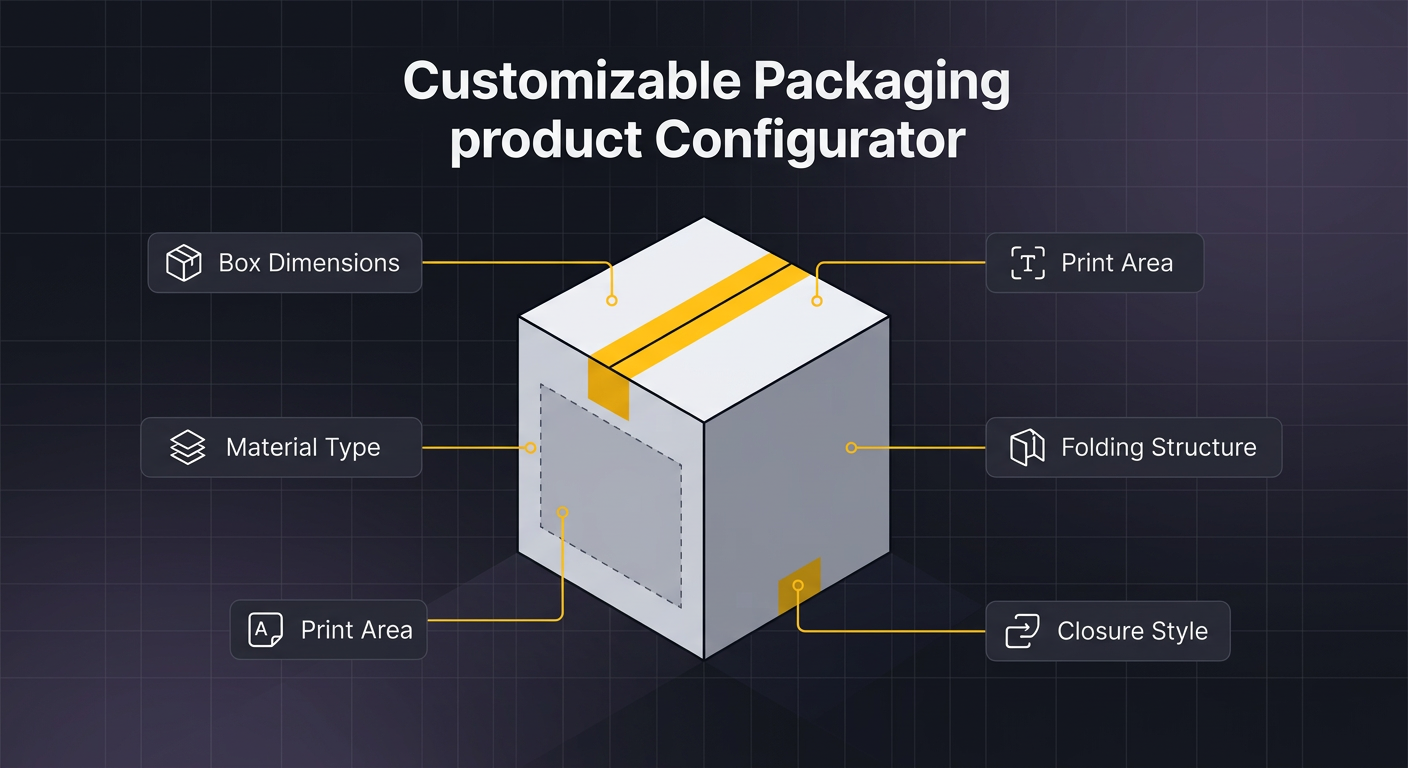
Packaging customisation involves a unique combination of structural and visual decisions. A customer ordering custom boxes needs to specify external dimensions, wall thickness, material grade (single-wall, double-wall, rigid), closure type (tuck-end, crash-lock, magnetic), interior padding, surface finish (matte, gloss, spot UV), and print coverage. Multiply those options and you quickly reach thousands of combinations — far too many for a static product catalogue.
Without a configurator, packaging companies rely on sales representatives to walk customers through options, generate quotes manually, and create 2D proofs that require imagination to interpret. This process is slow (typical quote turnaround is 24–48 hours), error-prone (miscommunicated dimensions are the top reason for packaging reorders), and unscalable (each inquiry consumes sales time regardless of order value). A configurator lets the customer handle the design, see the result in 3D, and receive instant pricing — freeing your sales team for high-value accounts.
Types of Packaging Configurators
Different packaging products require different configurator capabilities:
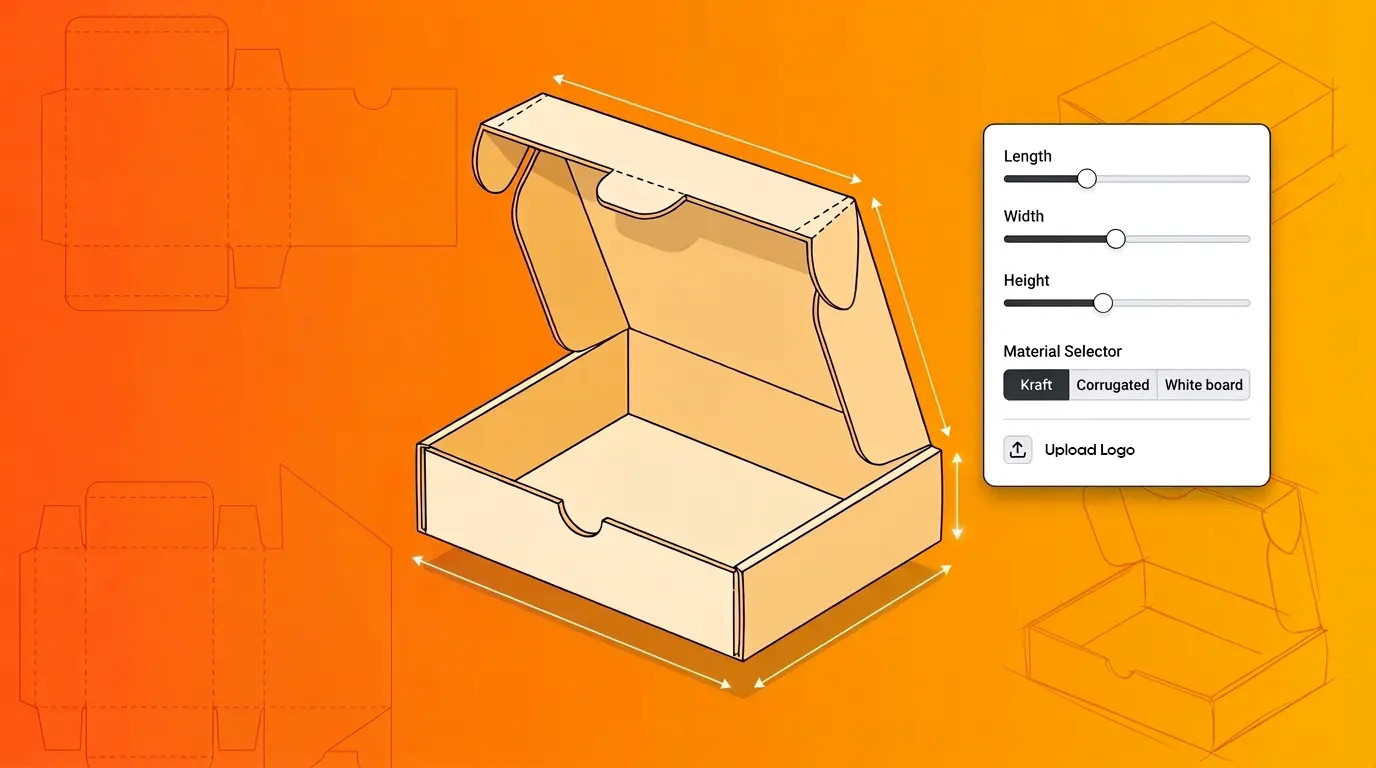
- Corrugated boxes and mailers: Dimension-driven configurators where customers set length, width, and height, select flute type and board grade, and see the box fold up in 3D. The configurator generates the dieline automatically.
- Retail packaging and gift boxes: Material and finish-focused configurators where visual appeal matters most. Customers choose from rigid board, art paper wraps, foil stamping, embossing, and ribbon closures, all rendered in photorealistic 3D.
- Labels and stickers: Print-area configurators where customers upload artwork, position it on the label shape, select material (paper, vinyl, polyester), and see the label applied to a product mock-up.
- Point-of-sale displays: Structural configurators for counter displays, floor stands, and shelf talkers, where dimensions, material, and branding combine to create a retail-ready fixture.
From Configuration to Production
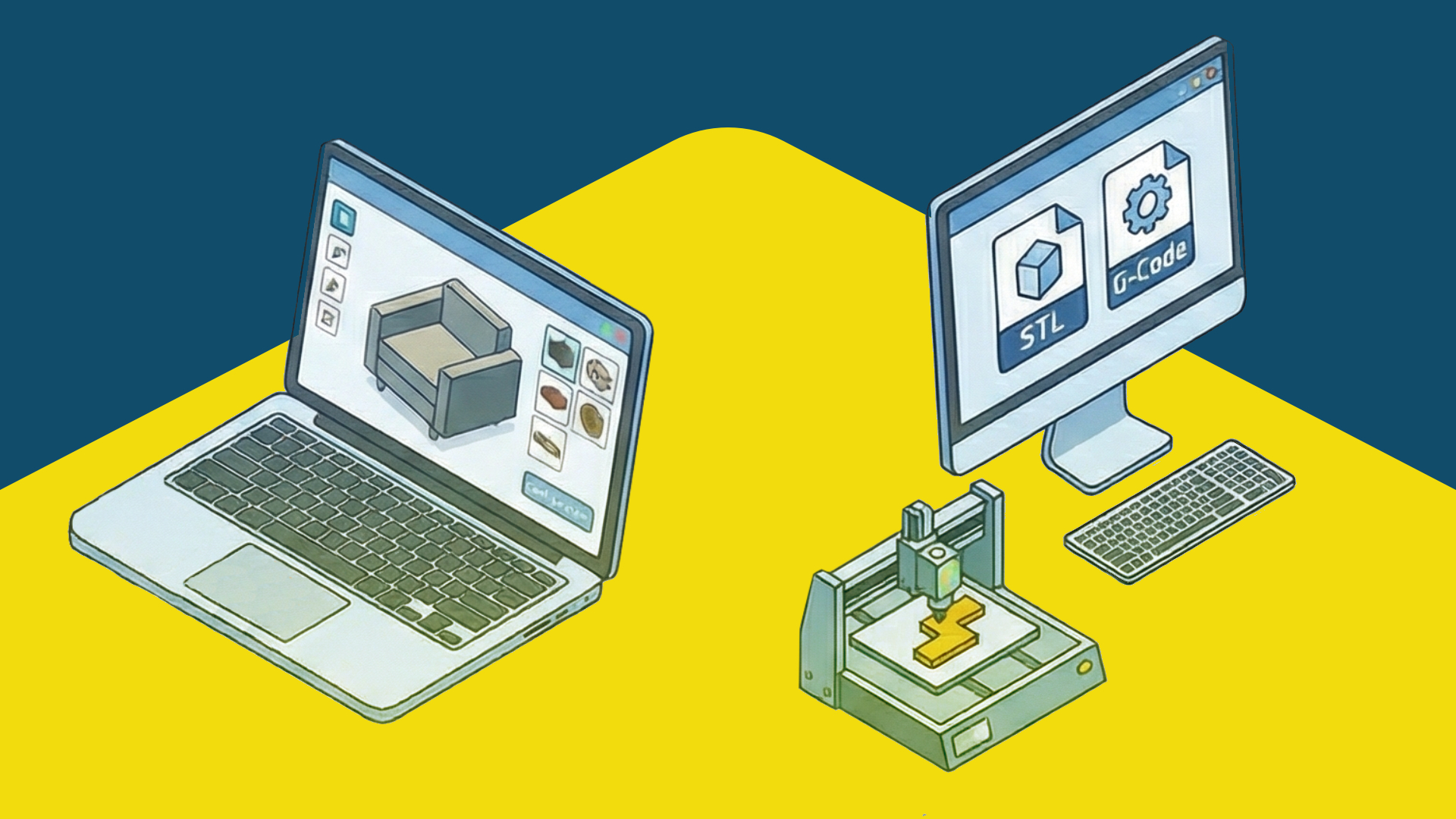
The real power of a packaging configurator lies in what happens after the customer clicks "order." A well-built configurator automatically generates the dieline — the flat template that defines how the packaging is cut and folded. This dieline exports as a DXF or PDF file that goes directly to the die-cutting machine or CNC router. No manual re-drawing. No interpretation errors.
Beyond the dieline, the configurator generates a complete bill of materials: board type and quantity, ink coverage calculations for print cost estimation, finishing specifications (lamination, varnish, foil), and assembly instructions. This design-to-fabrication pipeline eliminates the most error-prone step in packaging production — the manual conversion of a customer request into a production specification.
Volume Pricing and Bulk Orders
Packaging is inherently a volume business. Setup costs for die-cutting, printing plates, and finishing are amortised across the order quantity, meaning unit price drops dramatically at higher volumes. A configurator handles this with tiered pricing logic: the quoted price updates in real time as the customer adjusts the order quantity, showing clear breakpoints at 250, 500, 1,000, and 5,000 units.
This transparency eliminates back-and-forth quoting. Customers immediately see the cost benefit of ordering more, which drives larger average order values. Real-time pricing is particularly critical in packaging because material costs fluctuate with commodity markets. A configurator connected to current material pricing ensures quotes are always accurate, not based on last month's price sheet.
B2B and B2C Packaging Workflows
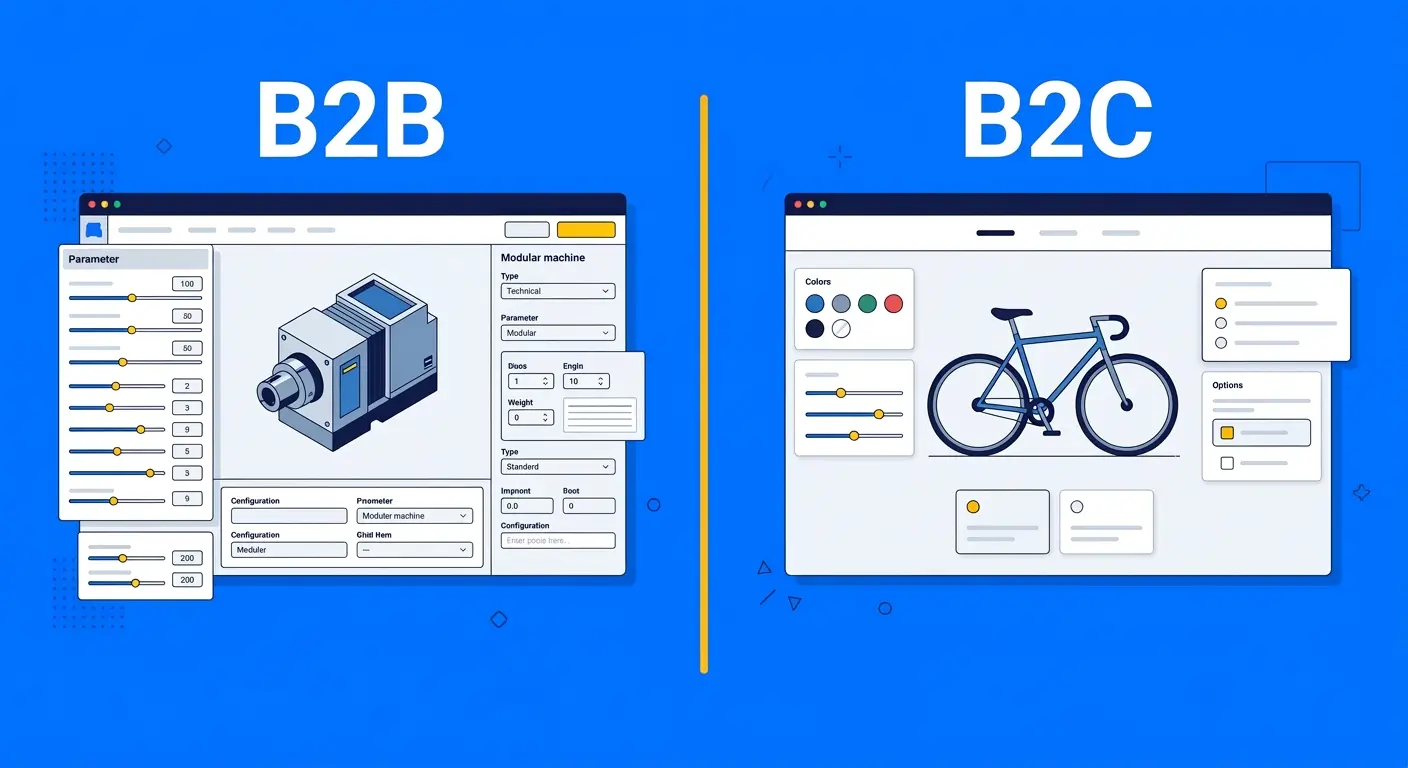
Packaging configurators serve both B2B and B2C customers, but the workflows differ. B2B buyers (brands ordering packaging for their products) need volume pricing, purchase order integration, artwork upload with bleed/trim guidance, and repeat order functionality. B2C buyers (consumers ordering gift boxes, personalised packaging) need simpler interfaces with pre-designed templates and single-unit ordering.
The B2B vs B2C configurator differences apply directly to packaging. B2B packaging configurators often include approval workflows, multi-user access, and ERP integration. B2C configurators prioritise speed, simplicity, and visual delight. The best platforms support both modes from a single product catalogue.
Sustainability and Material Transparency
Sustainability is now a primary packaging concern. McKinsey research shows that over 60% of consumers are willing to pay more for sustainable packaging. A configurator can surface sustainability data alongside material choices: recycled content percentage, FSC certification status, carbon footprint per unit, and end-of-life recyclability. This transparency helps brands make informed material decisions and communicate their sustainability credentials to end consumers.
How Configurator.tech Serves Packaging Companies
Configurator.tech provides parametric 3D configurators that handle the structural complexity of packaging products. Our platform supports dimension-driven box configuration with automatic dieline generation, material and finish visualisation, volume-based pricing tiers, and production-ready file export. The souvenir and promotional products industry uses similar configurator capabilities for branded packaging and merchandise.
Whether you manufacture corrugated shipping boxes or luxury retail packaging, explore our prebuilt configurator templates or contact our team to discuss your packaging configuration needs.