
'%3e%3cpath%20d='M15.1003%2043.5001C33.2091%2043.5001%2043.1166%2028.4935%2043.1166%2015.4838C43.1166%2015.062%2043.1072%2014.6307%2043.0884%2014.2088C45.0157%2012.815%2046.679%2011.0886%2048%209.11072C46.205%209.90932%2044.2993%2010.4309%2042.3478%2010.6576C44.4026%209.42594%2045.9411%207.49107%2046.6781%205.21166C44.7451%206.35724%2042.6312%207.16535%2040.4269%207.60134C38.9417%206.02324%2036.978%204.97835%2034.8394%204.62822C32.7008%204.27809%2030.5064%204.64222%2028.5955%205.66431C26.6846%206.68641%2025.1636%208.30953%2024.2677%2010.2827C23.3718%2012.256%2023.1509%2014.4694%2023.6391%2016.5807C19.725%2016.3843%2015.8959%2015.3675%2012.4%2013.5963C8.90405%2011.8251%205.81939%209.339%203.34594%206.29916C2.0888%208.46661%201.70411%2011.0314%202.27006%2013.4723C2.83601%2015.9132%204.31013%2018.047%206.39281%2019.4401C4.82926%2019.3905%203.29995%2018.9695%201.93125%2018.212V18.3338C1.92985%2020.6084%202.7162%2022.8133%204.15662%2024.5737C5.59704%2026.334%207.60265%2027.5412%209.8325%2027.9901C8.38411%2028.3864%206.86396%2028.4441%205.38969%2028.1588C6.01891%2030.115%207.24315%2031.8259%208.89154%2033.0528C10.5399%2034.2797%2012.5302%2034.9613%2014.5847%2035.0026C11.0968%2037.7423%206.78835%2039.2284%202.35313%2039.2213C1.56657%2039.2201%200.780798%2039.1719%200%2039.077C4.50571%2041.9676%209.74706%2043.5029%2015.1003%2043.5001Z'%20fill='%23F7F7F7'/%3e%3c/g%3e%3cdefs%3e%3cclipPath%20id='clip0'%3e%3crect%20width='48'%20height='48'%20fill='white'/%3e%3c/clipPath%3e%3c/defs%3e%3c/svg%3e)


Roomle is one of the most capable modular configurator platforms on the market, especially for furniture and interiors. But "modular" is a specific approach to product configuration — and it comes with trade-offs that matter depending on what you sell and how your production works. This post examines what Roomle does well, where its approach hits limits, and what to consider before committing.
How Roomle Works
Roomle (and its Rubens platform) grew out of the furniture industry, and that heritage shapes everything about how it works. The platform thinks in modules — a sofa system is a set of predefined components (left arm, right arm, corner piece, ottoman), a shelving unit is a grid of snappable slots, a wardrobe is a frame with configurable organizers. Roomle uses a four-level system:
- Level 1: 3D Viewer — visualization only, no configuration.
- Level 2: Basic Configurator — materials, colors, and sizes with up to 15 parameters.
- Level 3: Full Logic — modules, smart sizing, complex rules, and component dependencies.
- Level 4: Enterprise — ERP, CAD/CAM, PIM, and production workflow connections.
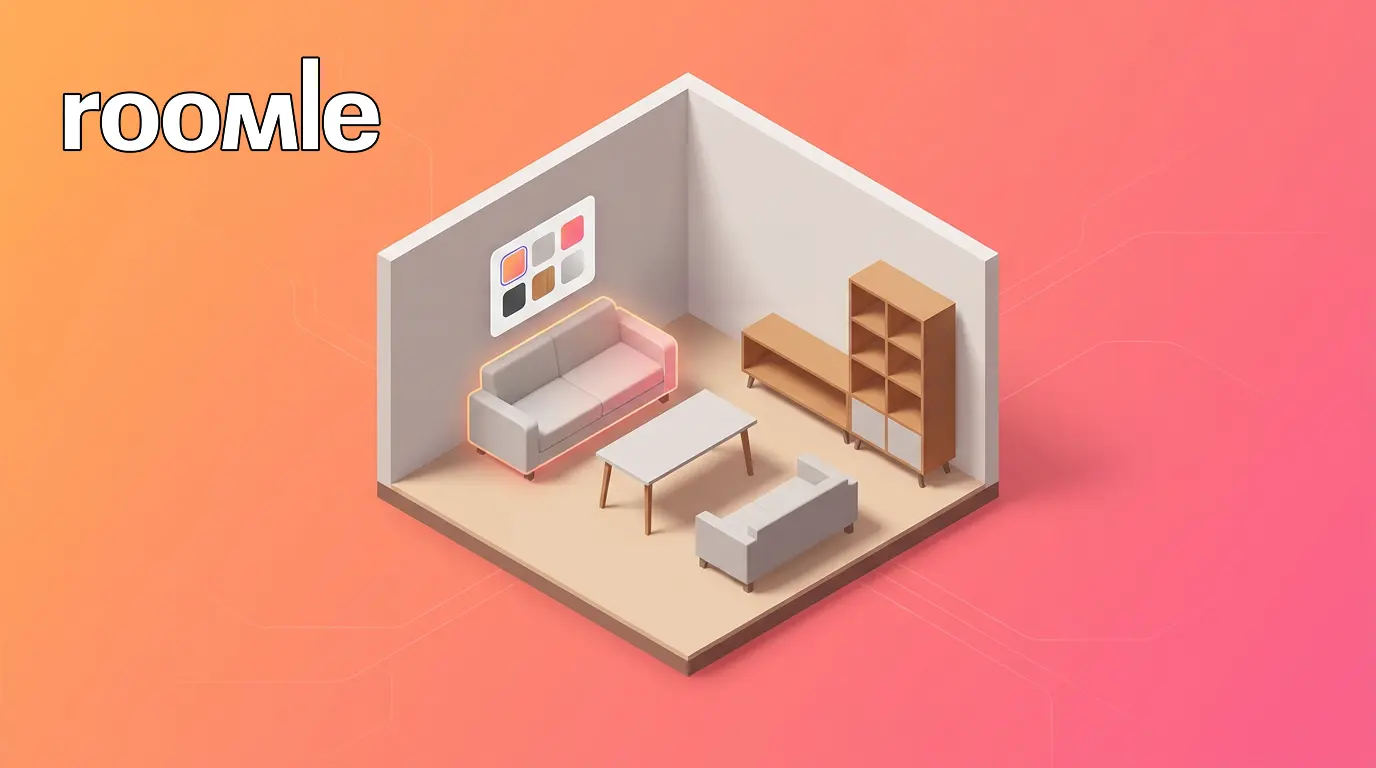
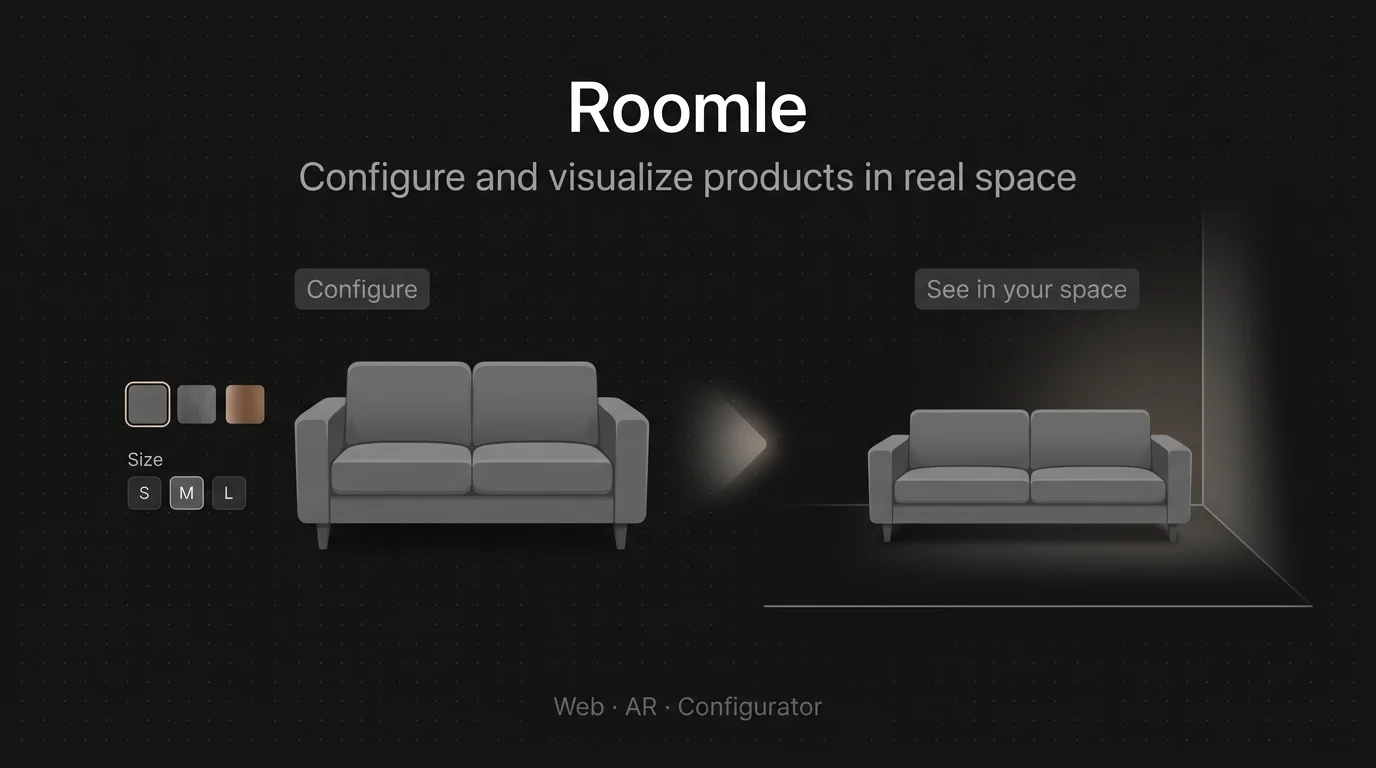
Roomle also offers a Room Designer — customers can draw a floor plan, drop in multiple configured products, and visualize the result in 3D or AR. For furniture retailers, this turns a single product sale into a room sale. Brands like USM Haller and TEAM 7 use this kind of spatial planning as a central part of the buying experience. Roomle's AR lets customers place configured products in their actual space using their phone camera, no app required. The platform integrates with Shopify, Shopware, WooCommerce, Adobe Commerce, BigCommerce, and Salesforce Commerce Cloud via API.
Where Roomle Falls Short
Roomle's output from a configuration session is a parts list — article numbers, quantities, and dimensions delivered as JSON to your e-commerce platform. Your shop matches those against your catalog and calculates the price. If you need production drawings, that's a separate step handled outside Roomle, typically in your CAD system. This works smoothly for standardized components manufactured in batches, but not for made-to-measure orders where every job produces unique geometry.
Roomle does offer a built-in Price Service that calculates totals from a CSV of article numbers and prices uploaded to Rubens Admin, but it's a lookup-based system rather than a formula-driven pricing engine — it won't dynamically compute prices for custom dimensions or complex material combinations. Roomle also includes built-in analytics and multi-language support (13+ languages with automatic browser detection). However, the analytics focus on configuration session metrics rather than sales-funnel insights like abandonment patterns or price sensitivity. Omnichannel deployment beyond web embedding requires separate integration setup per platform.
The authoring pipeline adds friction too. Getting a product into Roomle involves modeling 3D meshes (typically in Blender, though other 3D tools work), uploading to the Rubens Admin platform, then defining each component using RoomleScript — a proprietary scripting language that controls parameters, docking points, and part list output. For complex modular systems, this becomes substantial. Roomle's certified service partners can handle it, but the proprietary tooling creates vendor lock-in. Pricing starts at reportedly €850/mo (Basic) to €1,450/mo (Full Logic), plus configuration data creation costs.
Why Teams Switch from Roomle
What Configurator.tech Does Differently
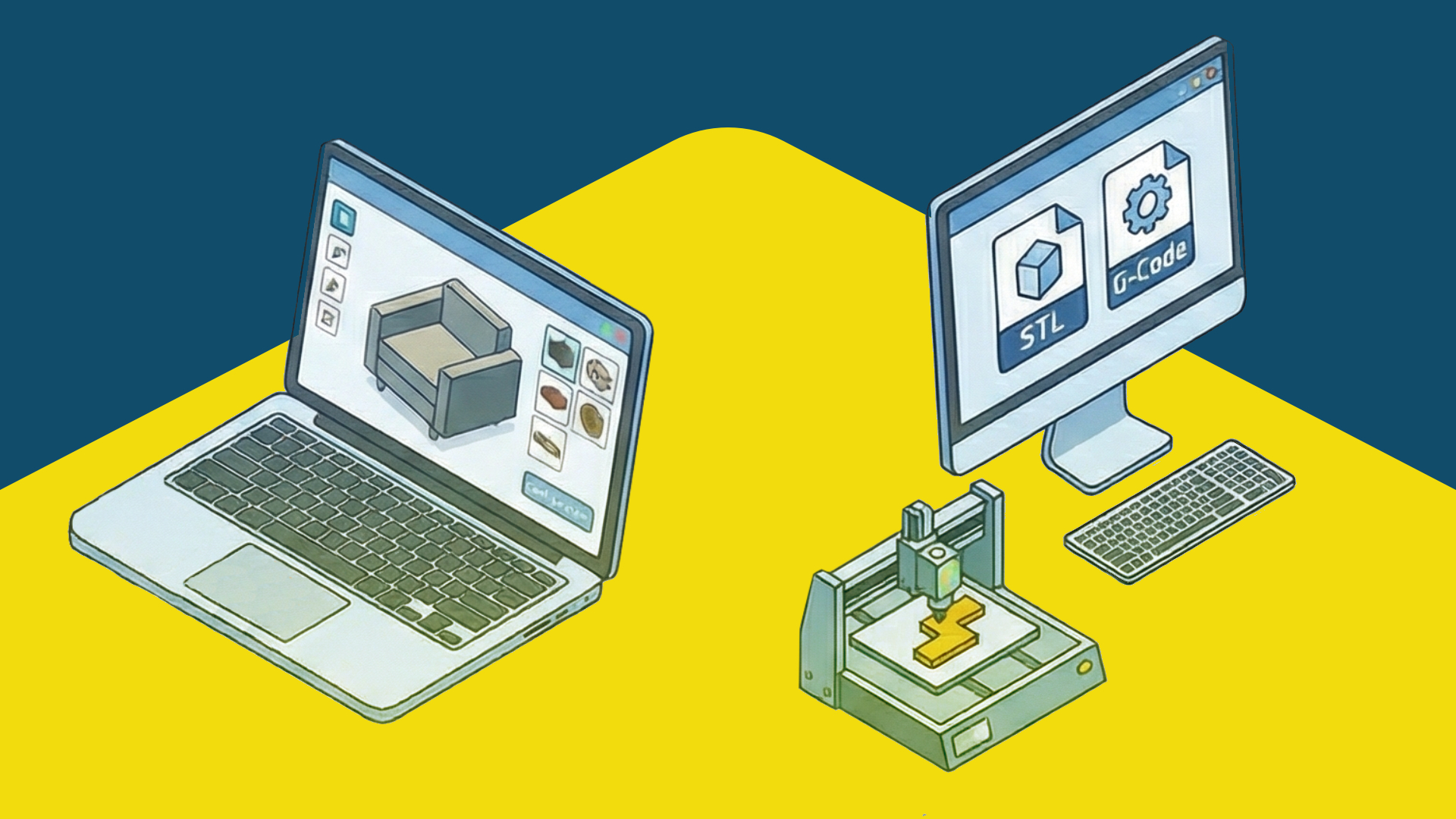
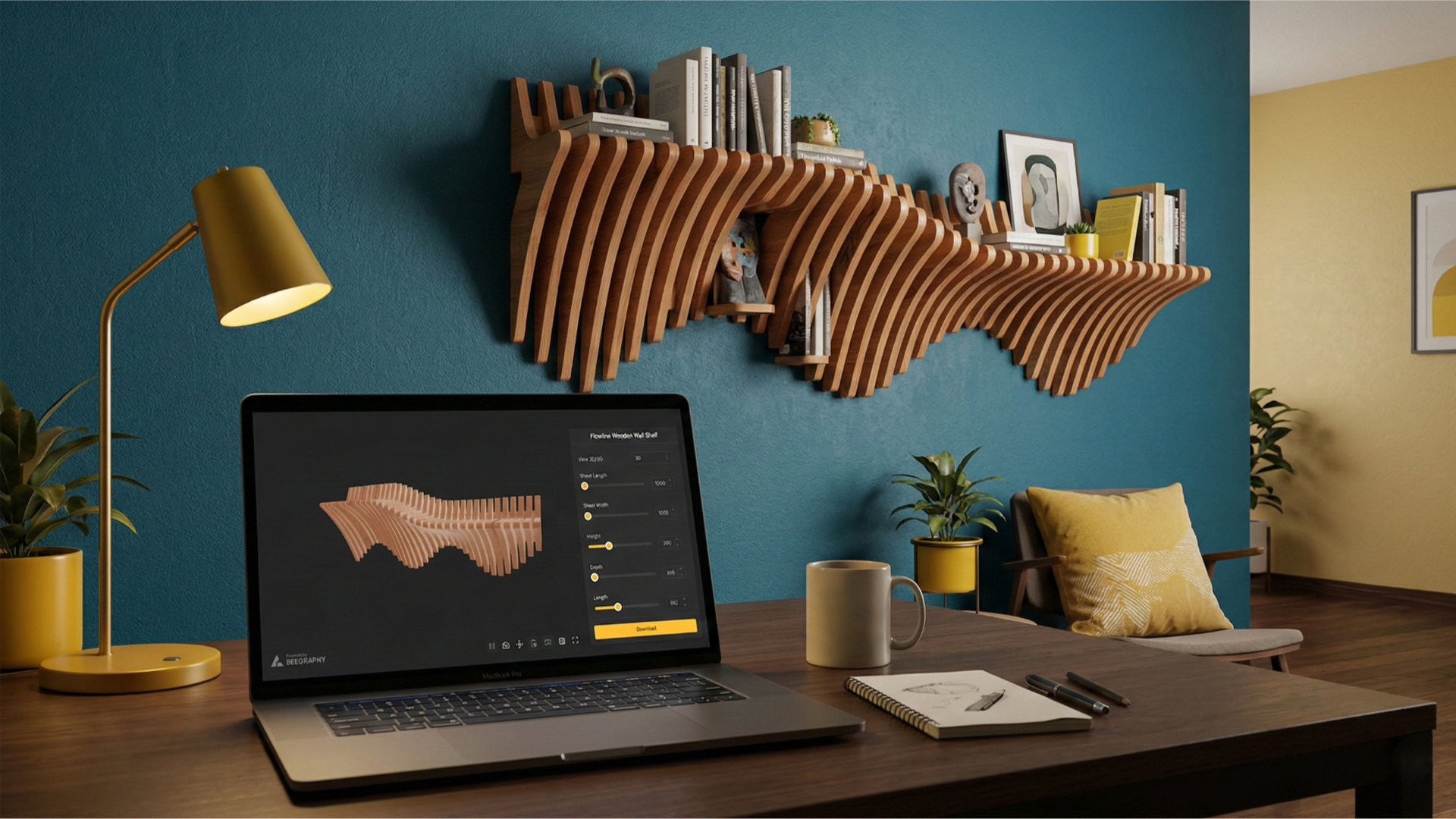
Configurator.tech is a service provider that uses Beegraphy as the platform — the parametric configurator is one layer within a broader sales and operations stack. The platform includes a built-in real-time pricing engine, auto-generated quotes, a white-labeled business dashboard, and automated production file output (DXF, STL, OBJ, STEP, SVG, G-code, and BOM). The configurator runs on the platform's cloud-native geometry kernel — when a customer adjusts a dimension, the engine recalculates the entire model with new profiles, cut patterns, and joinery. The parametric model is included as part of the setup, so no CAD expertise or proprietary scripting is needed.
The platform also includes sales-focused configuration analytics (popular combinations, abandonment funnels, price sensitivity, conversion metrics), multi-language support with RTL scripts and automatic locale detection, and omnichannel deployment from a single configuration across website, Shopify, WooCommerce, marketplaces, and in-store kiosks. Pricing is a one-time setup fee ($800 Starter / $8,800 Business) plus a flat $99/mo. See Configurator.tech pricing for full details.
Making the Call
- Your products are composed of standardized modules that snap together
- Room planning and spatial visualization are core to your sales process
- You sell primarily furniture and interior products
- Your team can invest in learning RoomleScript or hiring certified partners
- Every order involves custom dimensions and unique geometry
- You need production-ready files (DXF, STEP, G-code) with every order
- You want a configurator built for you without proprietary scripting
- You sell across multiple industries, not just furniture
- You need predictable pricing, built-in analytics, and multi-language support
For most manufacturers we work with, the custom work is what causes the biggest operational headache. The modular products already have a smooth sales process. It's the made-to-measure orders that eat up engineering hours, generate quoting errors, and slow down time-to-production. That's where Configurator.tech pays for itself.
Feature and Pricing Comparison at a Glance
| Feature | Configurator.tech | Roomle |
|---|---|---|
| Configuration approach | Parametric (geometry generated live) | Modular (predefined components assembled) |
| Custom dimensions per order | Yes, any value within constraints | Smart sizing within predefined ranges |
| Production files (DXF, STEP, G-code) | Auto-generated | Limited (parts list output, not fabrication files) |
| BOM generation | Built-in | Part list via JSON (article numbers + quantities) |
| Real-time pricing engine | Formula-driven, built-in | CSV-based Price Service (lookup, not formula-driven) |
| Room planning | Not built-in | Built-in Room Designer |
| AR support | WebAR, native AR | Built-in AR (no app required) |
| Authoring system | Parametric model included in setup (or BeeGraphy node editor) | Proprietary RoomleScript + 3D tool (Blender recommended) |
| Configuration analytics | Sales-focused dashboards (combinations, abandonment, conversion) | Session-level metrics |
| Multi-language support | Built-in with RTL and locale detection | Built-in (13+ languages, browser detection) |
| Industry focus | All industries | Furniture and interiors |
| Pricing | $800 one-time (Starter) / $8,800 (Business) + $99/mo | Reportedly €850-€1,450/mo + data creation costs |
| Setup time | Days to 2-4 weeks | Weeks to months |
Want to see how Configurator.tech handles your product? Book a free demo →