
'%3e%3cpath%20d='M15.1003%2043.5001C33.2091%2043.5001%2043.1166%2028.4935%2043.1166%2015.4838C43.1166%2015.062%2043.1072%2014.6307%2043.0884%2014.2088C45.0157%2012.815%2046.679%2011.0886%2048%209.11072C46.205%209.90932%2044.2993%2010.4309%2042.3478%2010.6576C44.4026%209.42594%2045.9411%207.49107%2046.6781%205.21166C44.7451%206.35724%2042.6312%207.16535%2040.4269%207.60134C38.9417%206.02324%2036.978%204.97835%2034.8394%204.62822C32.7008%204.27809%2030.5064%204.64222%2028.5955%205.66431C26.6846%206.68641%2025.1636%208.30953%2024.2677%2010.2827C23.3718%2012.256%2023.1509%2014.4694%2023.6391%2016.5807C19.725%2016.3843%2015.8959%2015.3675%2012.4%2013.5963C8.90405%2011.8251%205.81939%209.339%203.34594%206.29916C2.0888%208.46661%201.70411%2011.0314%202.27006%2013.4723C2.83601%2015.9132%204.31013%2018.047%206.39281%2019.4401C4.82926%2019.3905%203.29995%2018.9695%201.93125%2018.212V18.3338C1.92985%2020.6084%202.7162%2022.8133%204.15662%2024.5737C5.59704%2026.334%207.60265%2027.5412%209.8325%2027.9901C8.38411%2028.3864%206.86396%2028.4441%205.38969%2028.1588C6.01891%2030.115%207.24315%2031.8259%208.89154%2033.0528C10.5399%2034.2797%2012.5302%2034.9613%2014.5847%2035.0026C11.0968%2037.7423%206.78835%2039.2284%202.35313%2039.2213C1.56657%2039.2201%200.780798%2039.1719%200%2039.077C4.50571%2041.9676%209.74706%2043.5029%2015.1003%2043.5001Z'%20fill='%23F7F7F7'/%3e%3c/g%3e%3cdefs%3e%3cclipPath%20id='clip0'%3e%3crect%20width='48'%20height='48'%20fill='white'/%3e%3c/clipPath%3e%3c/defs%3e%3c/svg%3e)


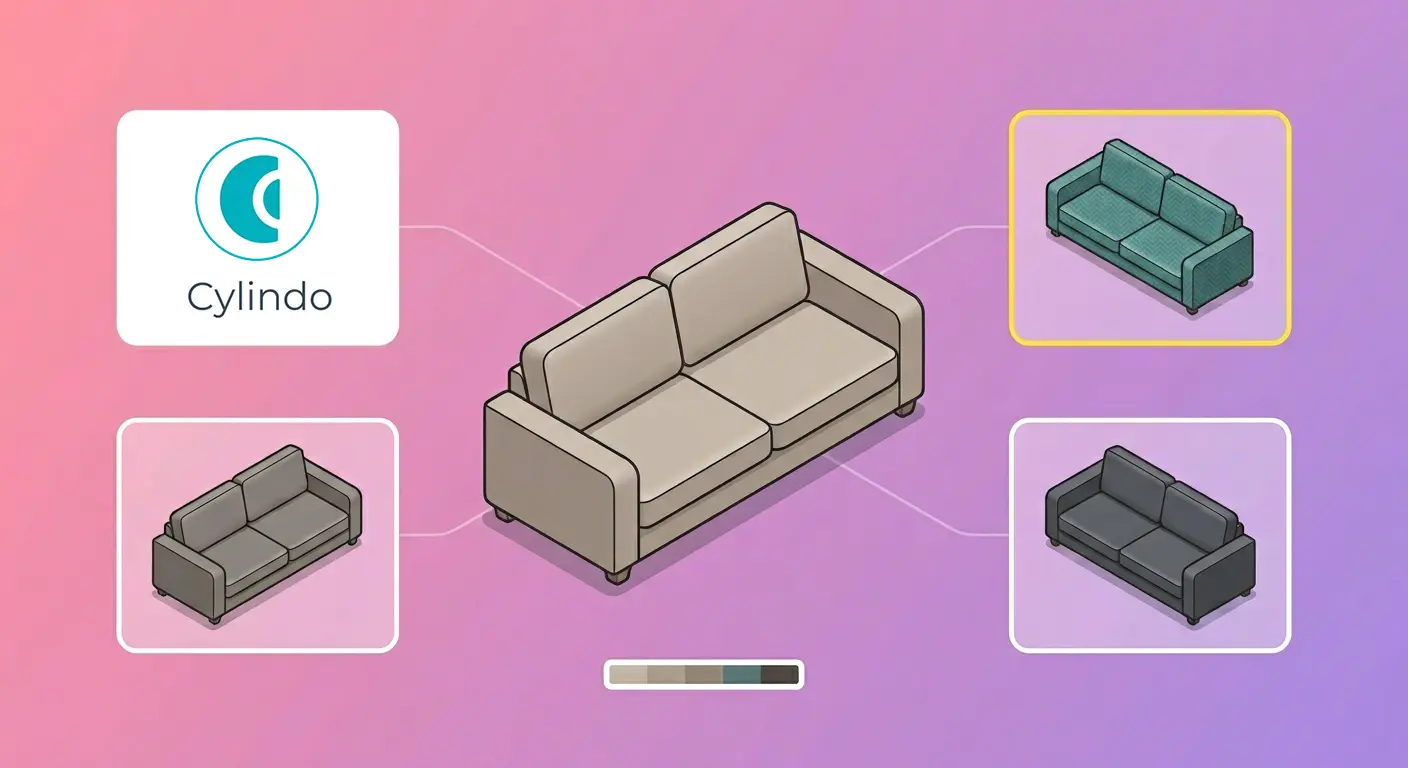
Cylindo is a 3D product visualization platform that helps furniture brands create, manage, and distribute photorealistic product imagery at scale. It's one of the strongest tools in its category — but "visualization" and "configuration" are different problems. This post examines what Cylindo does well, where its approach hits limits, and what to consider if your products require parametric configuration and manufacturing output.
How Cylindo Works
Cylindo was built for the furniture industry, and it shows. Every feature is designed around the challenge of showing furniture online in a way that builds enough confidence for a purchase without a showroom visit. The platform is owned by Chaos (the company behind V-Ray, one of the most widely used rendering engines in film, architecture, and product design), and that pedigree is visible in the visual quality.
Cylindo's core is built around "3D Master Assets" — high-poly digital twins of your products that can be reused across every channel. From those master assets, the platform generates 360-degree spins, high-resolution stills for every material and color variant, and lifestyle scenes with furniture placed in styled room environments. Cylindo Studio is a self-service tool for creating photorealistic lifestyle imagery. Cylindo Curator combines 360 spins, zoom, AR, and media into an interactive product page viewer optimized for conversion.
The Cylindo Modular Designer is the newest addition and the feature closest to configurator territory. It offers three building methods: click-and-place (arrange sofa modules freely), generator (set parameters like size and material to auto-generate configurations), and set builder (create coordinated product bundles with snapping logic). It includes pricing display, add-to-cart, BOM generation, and ERP integration. Localization for markets and currencies is supported within the Modular Designer.
Cylindo also includes Cylindo Intelligence — a dedicated analytics dashboard tracking image views, user interactions, product configurations, and conversion metrics, with Google Analytics 4 integration. AR lets customers place configured furniture in their room via phone, no app required. Brands like Joybird and EQ3 use it — EQ3 reported approximately 36% higher conversions, 88% higher average order value, and 116% more page views.
Where Cylindo Falls Short
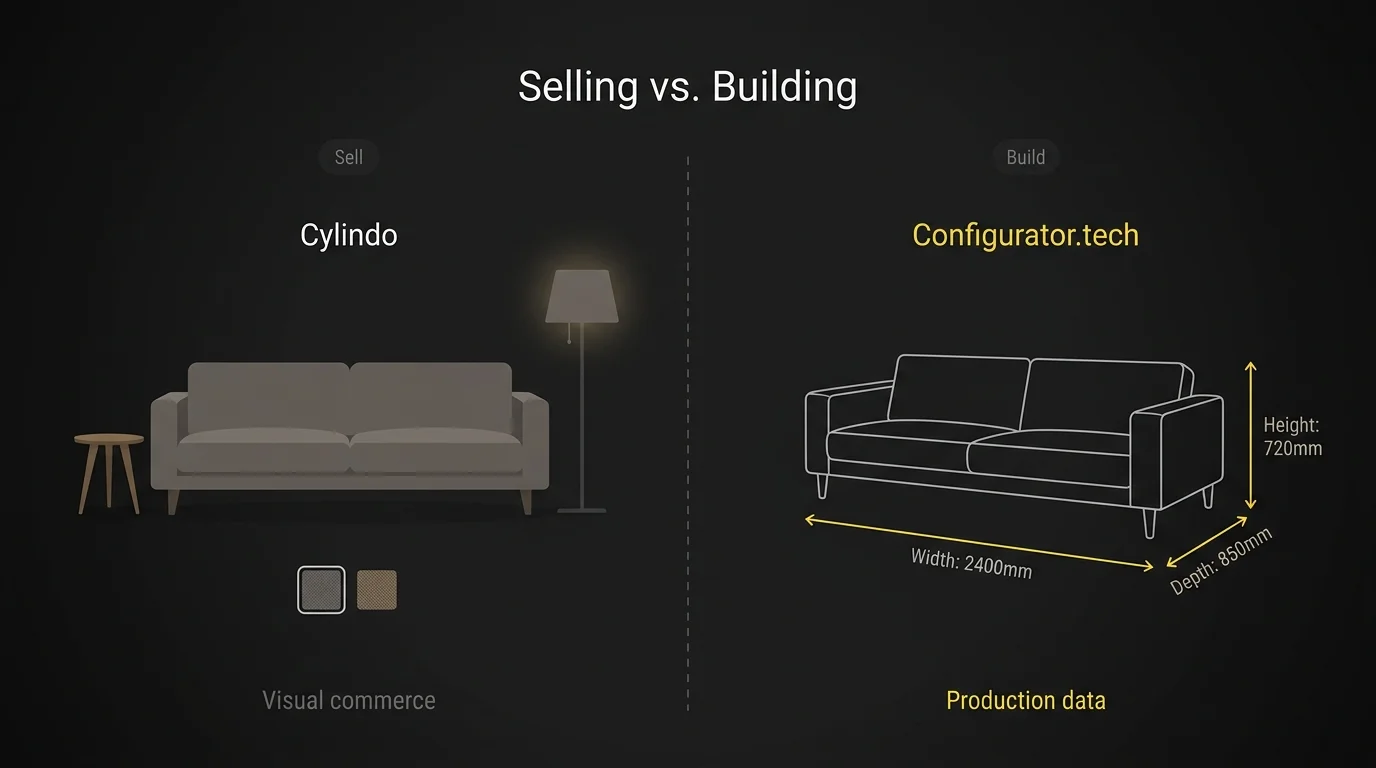
The geometry doesn't change. Cylindo works from pre-built 3D master assets — your product is modeled once at high fidelity, and the platform generates every possible visual from that model. When a customer "configures" a product, they're selecting from predefined options: this fabric, that leg style, this arm type. The Modular Designer extends this to spatial arrangement (where does the corner piece go?), but the individual components are still fixed-geometry assets. There's no parametric engine underneath. If a customer needs a sofa that's 2,340mm wide instead of the standard 2,400mm, Cylindo can't generate that variant.
Cylindo also doesn't generate production-ready manufacturing files. The Modular Designer can produce a BOM and pricing display, but the output is a parts list of standardized components, not fabrication files with custom dimensions (no STEP, G-code, or dimensionally precise DXF for CNC machines).
And Cylindo is furniture-focused. Its tooling, asset pipeline, Modular Designer, analytics, and case studies are all built around how furniture is sold online. If you sell staircases, industrial enclosures, CNC-cut signage, jewelry, or any non-furniture product, the platform isn't designed for you. Pricing is not published — you'll need to request a custom quote, and the platform positions as a premium enterprise solution.
Why Teams Switch from Cylindo
What Configurator.tech Does Differently
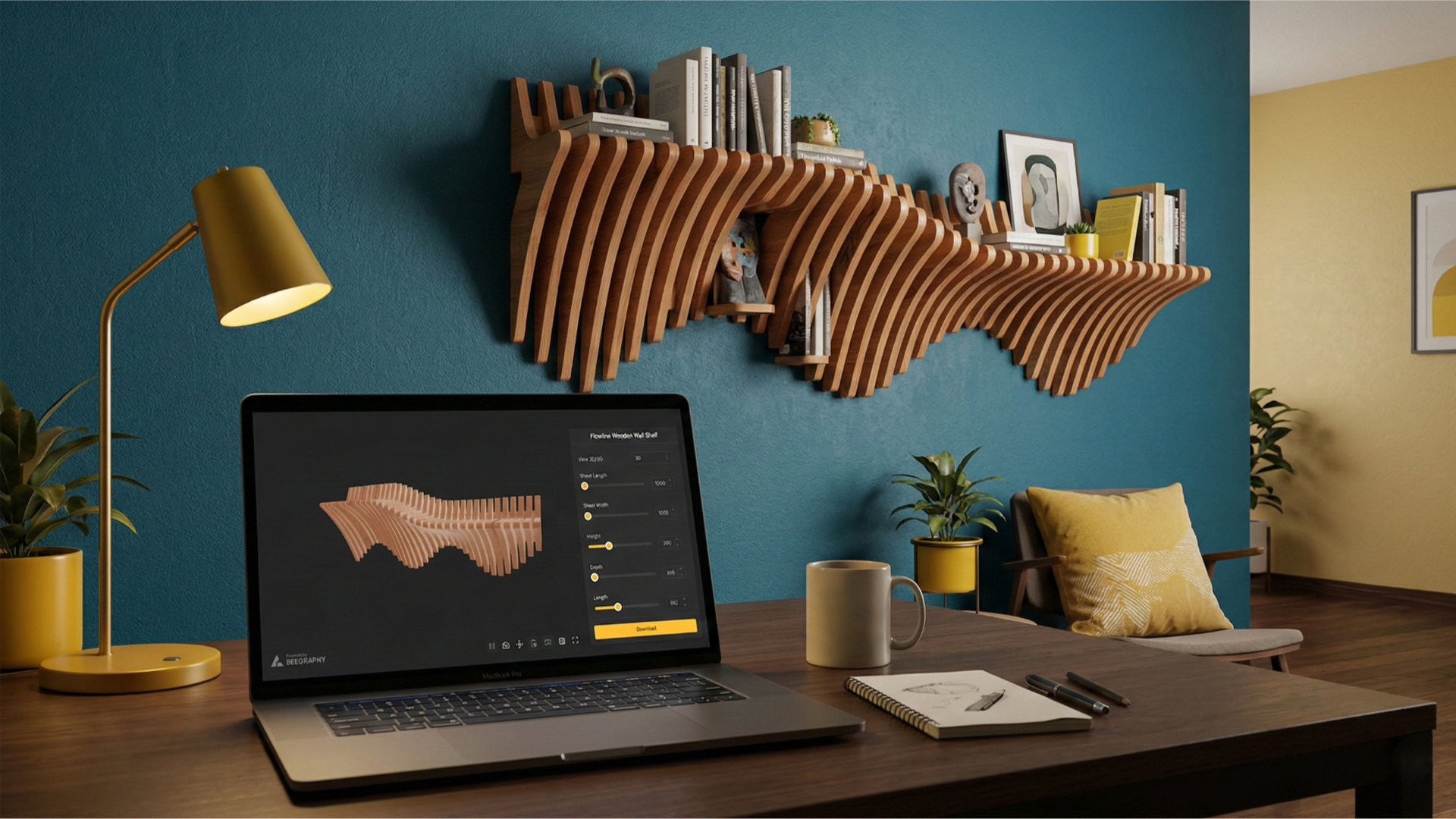
Configurator.tech is a service provider that uses Beegraphy as the platform — the parametric configurator is one layer within a broader sales and operations stack. The platform's geometry kernel runs natively in the cloud and computes 3D geometry from rules and parameters in real time. When a customer enters a dimension, the engine rebuilds the entire model to that specification — correct profiles, cuts, joinery, and structural logic. The parametric model is included as part of the setup, so no 3D artists or CAD licenses are needed.
Every configuration produces fabrication-ready output: DXF, STL, OBJ, STEP, SVG, G-code, and a full Bill of Materials. The platform includes a built-in real-time pricing engine (formula-driven, with multi-currency, taxes, and discounts), instant quote generation, a white-labeled business dashboard, and sales-focused configuration analytics with abandonment funnels and conversion metrics.
The platform also includes multi-language support with RTL scripts and automatic locale detection, and omnichannel deployment from a single configuration across website, Shopify, WooCommerce, marketplaces, and in-store kiosks. Configurator.tech is industry-agnostic — furniture, staircases, doors and windows, industrial components, jewelry, 3D-printed parts. Full API and SDK access is available. See Configurator.tech pricing for full details.
The Decision Framework
- You're a furniture brand and your challenge is visual content at scale
- You need cinema-grade product imagery to replace photoshoots
- Your products are configured from standardized modular components
- Lifestyle imagery, 360 spins, and AR are central to your sales strategy
- Your customers specify custom dimensions and the geometry changes per order
- You need fabrication files (DXF, STEP, G-code, BOM) for manufacturing
- You sell products beyond furniture — any configurable manufactured product
- You want integrated pricing, quoting, and order management
- You need predictable, transparent pricing without enterprise sales calls
Some furniture manufacturers need both: beautiful visual content for their website (Cylindo's strength) and parametric configuration for their made-to-measure lines (Configurator.tech's strength). In that case, they're complementary tools. But if you have to choose one, the question is whether your bigger problem is visual content or manufacturing automation. For most manufacturers, the bottleneck isn't the product images — it's the engineer redrawing every custom order in CAD before it can go to the shop floor.
Feature Comparison at a Glance
| Feature | Configurator.tech | Cylindo |
|---|---|---|
| Primary purpose | Parametric product configuration + manufacturing | Visual content generation + product visualization |
| Custom dimensions per order | Yes, any value within constraints | No, predefined options only |
| Production files (DXF, STEP, G-code) | Auto-generated for any dimension | Not available (visual output only) |
| BOM generation | Built-in (with fabrication files) | Modular Designer only (standardized parts list) |
| Visual content pipeline | Real-time WebGL | Cinema-grade renders, 360 spins, lifestyle imagery |
| Modular spatial design | Not built-in | Modular Designer (click-and-place, generator, set builder) |
| AR support | WebAR, native AR | Built-in AR (no app required) |
| Real-time pricing engine | Formula-driven, built-in | Pricing display in Modular Designer |
| Configuration analytics | Sales-focused dashboards (combinations, abandonment, conversion) | Cylindo Intelligence (views, interactions, conversions) |
| Industry focus | All industries | Furniture |
| Pricing model | $800 one-time + $99/mo, transparent | Custom enterprise pricing (not published) |
| Setup | Parametric model included, days to 2-4 weeks | 3D Master Asset creation + platform onboarding |
Want to see how Configurator.tech handles your product? Book a free demo →