
'%3e%3cpath%20d='M15.1003%2043.5001C33.2091%2043.5001%2043.1166%2028.4935%2043.1166%2015.4838C43.1166%2015.062%2043.1072%2014.6307%2043.0884%2014.2088C45.0157%2012.815%2046.679%2011.0886%2048%209.11072C46.205%209.90932%2044.2993%2010.4309%2042.3478%2010.6576C44.4026%209.42594%2045.9411%207.49107%2046.6781%205.21166C44.7451%206.35724%2042.6312%207.16535%2040.4269%207.60134C38.9417%206.02324%2036.978%204.97835%2034.8394%204.62822C32.7008%204.27809%2030.5064%204.64222%2028.5955%205.66431C26.6846%206.68641%2025.1636%208.30953%2024.2677%2010.2827C23.3718%2012.256%2023.1509%2014.4694%2023.6391%2016.5807C19.725%2016.3843%2015.8959%2015.3675%2012.4%2013.5963C8.90405%2011.8251%205.81939%209.339%203.34594%206.29916C2.0888%208.46661%201.70411%2011.0314%202.27006%2013.4723C2.83601%2015.9132%204.31013%2018.047%206.39281%2019.4401C4.82926%2019.3905%203.29995%2018.9695%201.93125%2018.212V18.3338C1.92985%2020.6084%202.7162%2022.8133%204.15662%2024.5737C5.59704%2026.334%207.60265%2027.5412%209.8325%2027.9901C8.38411%2028.3864%206.86396%2028.4441%205.38969%2028.1588C6.01891%2030.115%207.24315%2031.8259%208.89154%2033.0528C10.5399%2034.2797%2012.5302%2034.9613%2014.5847%2035.0026C11.0968%2037.7423%206.78835%2039.2284%202.35313%2039.2213C1.56657%2039.2201%200.780798%2039.1719%200%2039.077C4.50571%2041.9676%209.74706%2043.5029%2015.1003%2043.5001Z'%20fill='%23F7F7F7'/%3e%3c/g%3e%3cdefs%3e%3cclipPath%20id='clip0'%3e%3crect%20width='48'%20height='48'%20fill='white'/%3e%3c/clipPath%3e%3c/defs%3e%3c/svg%3e)


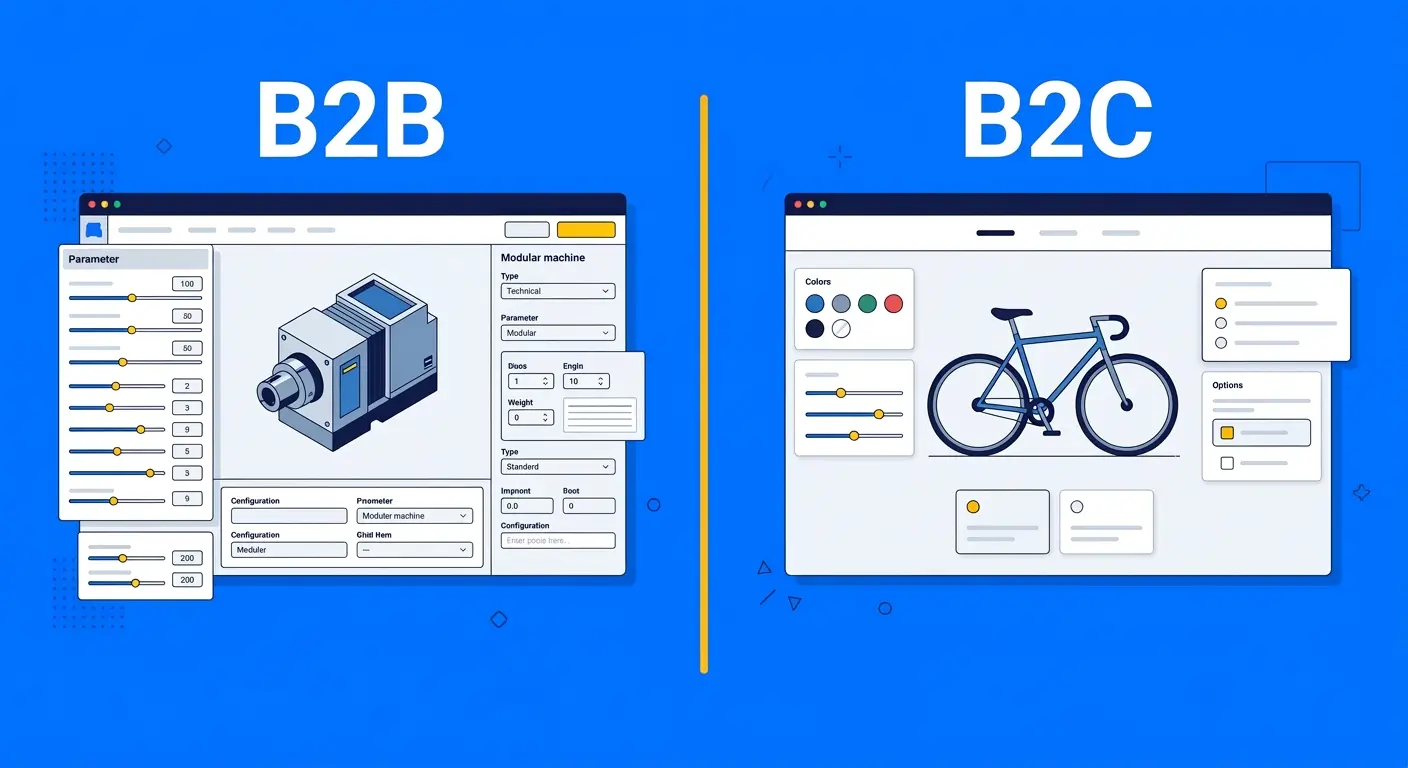
The global B2B ecommerce market is projected to reach $36.16 trillion by 2026, dwarfing B2C online retail by a factor of roughly five. Yet the tools most commonly associated with product configurators — drag-and-drop color pickers, real-time 3D previews, "add to cart" buttons — were designed with individual consumers in mind. As B2B buyers increasingly demand the same seamless digital experiences they enjoy as consumers, the gap between B2B and B2C product configuration is narrowing. But it has not disappeared. Understanding the differences between these two models is essential for any business building or investing in a product configurator.
How B2C Configurators Work
B2C product configurators are built around one goal: convert a single buyer as quickly and enjoyably as possible. The user journey is visual-first, emotionally driven, and designed for immediate purchase.
A consumer configuring a custom sofa on a furniture retailer's site, for example, chooses fabric, color, leg style, and cushion firmness from clearly labeled dropdowns. A 3D preview updates in real time, pricing adjusts instantly, and the "buy now" button is never more than a click away. The entire experience might last five minutes.
Key characteristics of B2C configurators include:
- Visual-first design: High-quality 3D renders, augmented reality previews, and lifestyle imagery drive engagement and reduce uncertainty.
- Simple pricing: Prices update in real time based on selected options. What the customer sees is what they pay — no negotiations, no volume discounts, no hidden fees.
- Emotional decision-making: B2C purchases are driven by aesthetics, personal preference, and impulse. The configurator's job is to make the product feel personal and desirable.
- Short decision timelines: Most B2C configuration sessions end in a single visit. Cart abandonment is the primary enemy, not a months-long procurement cycle.
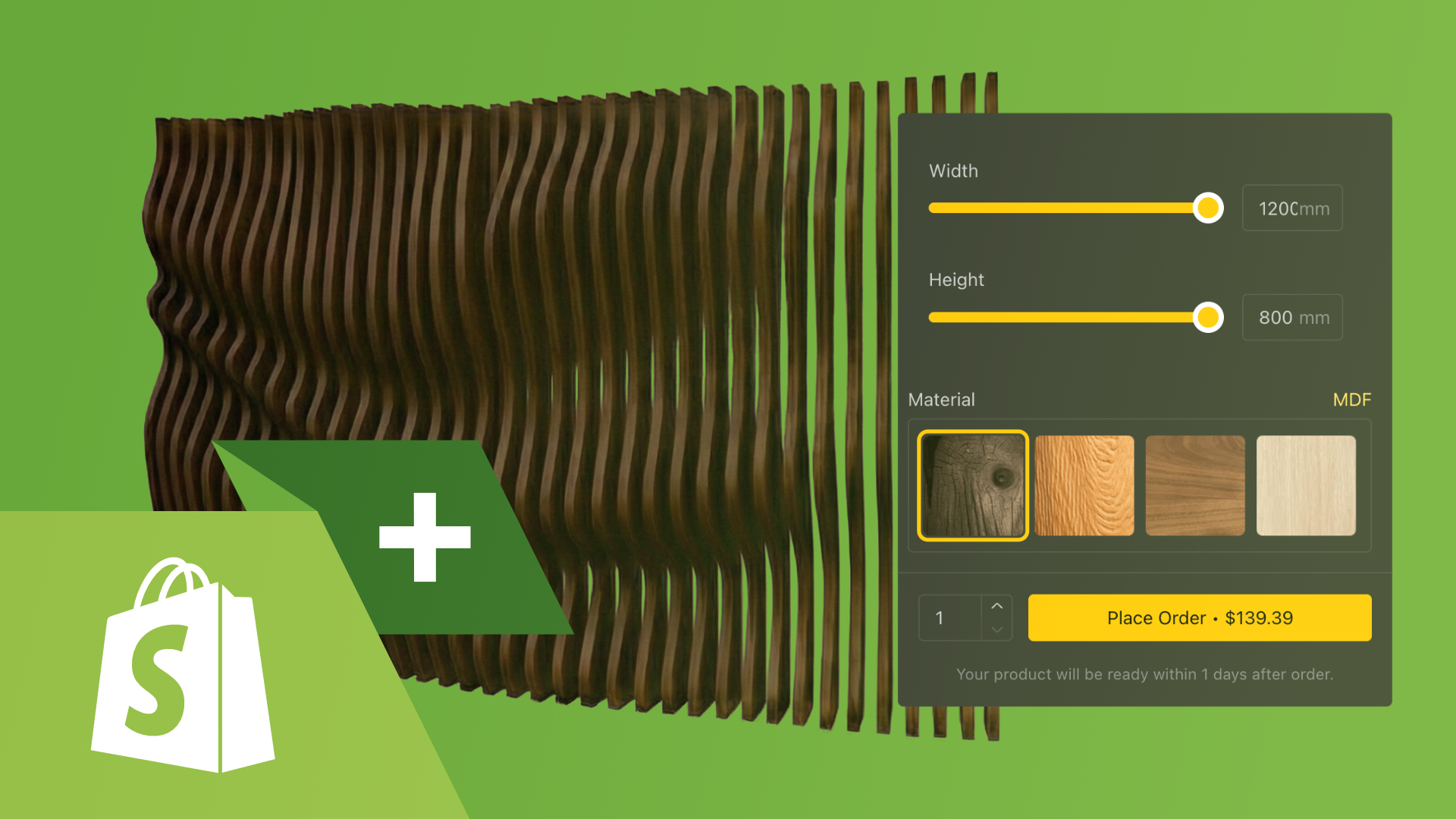
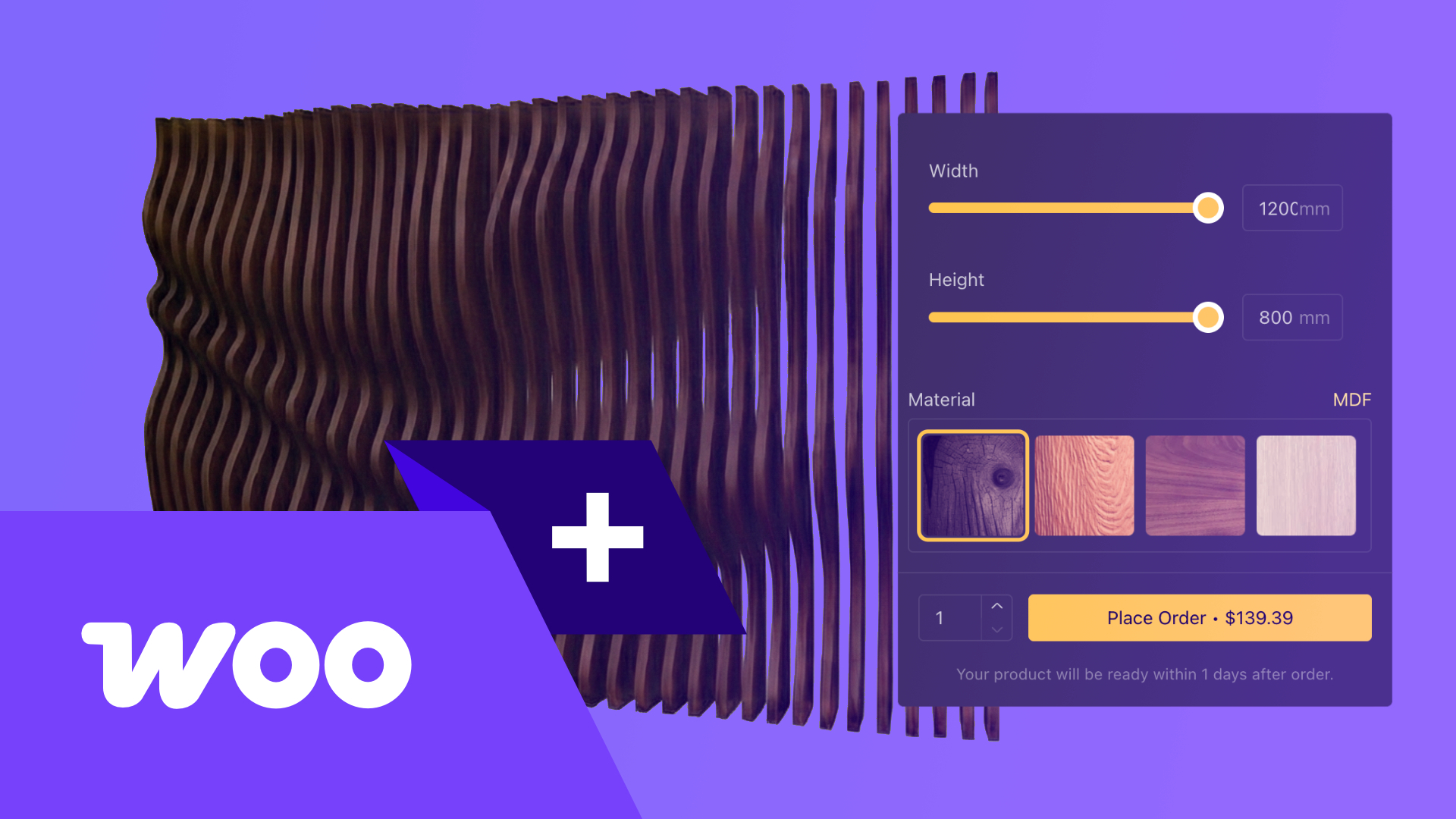
- Standalone transactions: The configurator connects to a standard ecommerce checkout — Shopify, WooCommerce, or a custom storefront — and the order is complete once payment clears.
How B2B Configurators Work
B2B configurators serve a fundamentally different audience with fundamentally different needs. The buyer might be a procurement manager ordering 500 custom window frames for a commercial project, or a distributor configuring modular shelving systems for resale. The stakes are higher, the products are more complex, and the purchasing process involves multiple stakeholders.
Forrester predicts that more than half of large B2B purchases — those valued at $1 million or more — will be processed through digital self-serve channels. That shift makes sophisticated product configurators not just useful but essential for B2B sellers. Here is what sets them apart:
- Complex pricing tiers: B2B pricing is rarely fixed. Volume discounts, contract-based rates, customer-specific pricing, and negotiated margins must all be computed dynamically within the configurator.
- Approval workflows: A B2B order often requires sign-off from engineering, finance, and management before it is placed. The configurator must support multi-step approval chains, saved configurations, and shared review links.
- RFQ and quote generation: Instead of an "add to cart" button, B2B configurators frequently produce detailed request-for-quote (RFQ) documents, PDF spec sheets, or formal proposals that feed into a sales pipeline.
- Bulk ordering and repeat purchases: B2B buyers configure products in large quantities and often reorder with minor variations. The configurator must handle batch configurations, saved templates, and order history.
- ERP and CRM integration: B2B configurators need to sync with enterprise resource planning systems, customer relationship management tools, and manufacturing execution systems to ensure configured products can actually be produced and delivered.
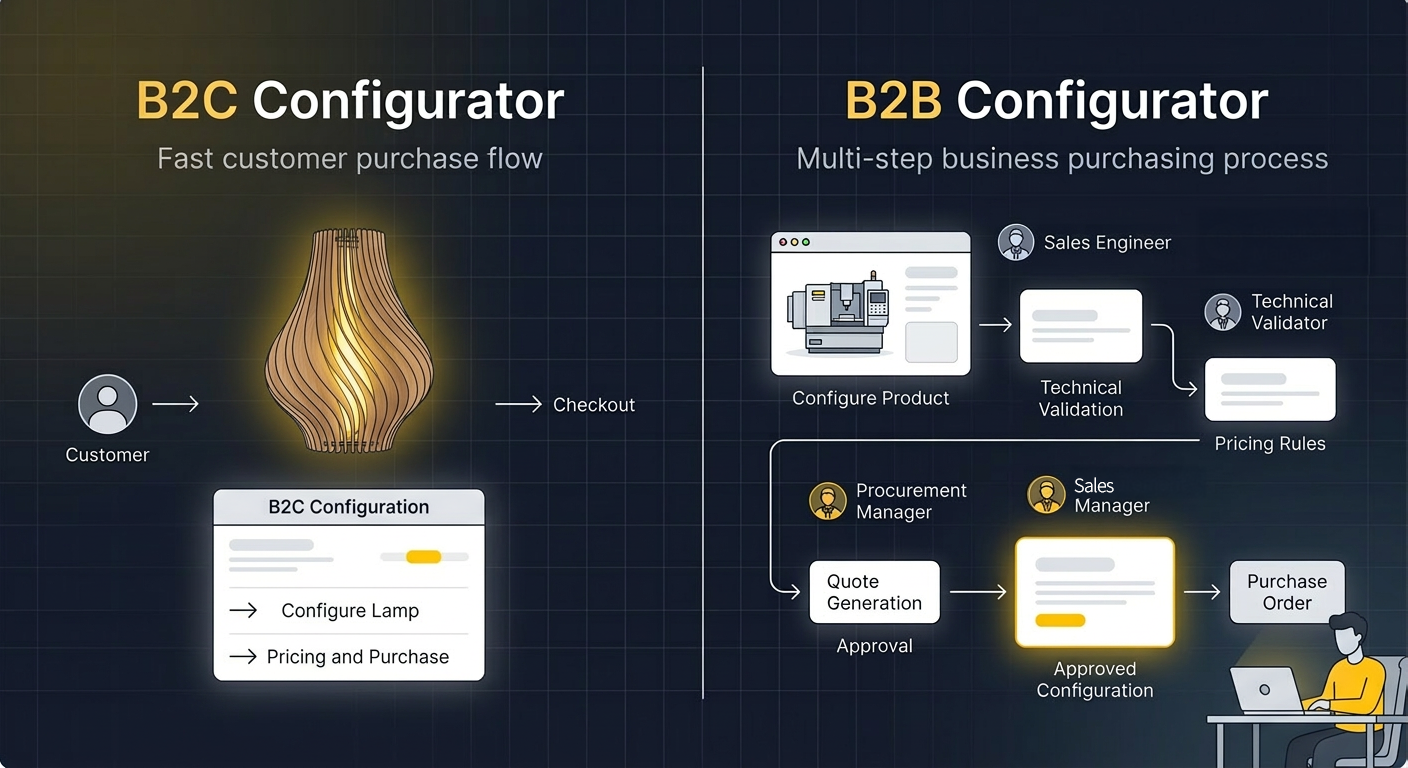
Key Differences at a Glance
The contrast between B2B and B2C product configurators becomes clearest when you compare them across core dimensions:
User journey: B2C configurators guide a single consumer through a linear, visual selection process. B2B configurators must accommodate multiple users — sales reps, engineers, procurement teams — each with different permissions, views, and needs. B2B buyers now complete roughly 80% of their purchasing journey independently before ever engaging a sales rep, which makes self-serve configurator functionality critical.
Pricing complexity: B2C pricing is transparent and immediate. B2B pricing is layered — involving base costs, volume breaks, regional adjustments, contractual rates, and sometimes manual overrides. A real-time pricing engine for B2B must account for all of these variables without exposing unnecessary complexity to the buyer.
Output requirements: A B2C configurator produces a cart item. A B2B configurator may need to produce a bill of materials, a CAD-ready spec sheet, a formal quote, or production-ready manufacturing data. The depth of output directly affects what the configurator must capture and compute.
Integration needs: B2C configurators typically integrate with ecommerce platforms and payment gateways. B2B configurators must connect to ERP systems (SAP, Oracle, Microsoft Dynamics), CRM platforms (Salesforce, HubSpot), inventory management systems, and often custom internal tools. 73% of global B2B buyers rank online commerce as their top purchasing channel, which means these integrations are not optional — they are the backbone of modern B2B operations.
Decision timeline: A B2C purchase typically completes in minutes. A B2B procurement cycle can span weeks or months, involving demos, revisions, internal approvals, and contract negotiations. The configurator must persist configurations across sessions and support collaborative review.
Why the Line Is Blurring
Here is the trend that matters most: B2B buyers are increasingly expecting B2C-level experiences. McKinsey reports that 71% of B2B buyers expect personalized interactions and become frustrated when those expectations are not met. Two-thirds of B2B buyers are willing to make purchases exceeding $50,000 without direct engagement with a salesperson, and 39% now spend over $500,000 per order through self-service digital channels — up from 28% just two years ago.
This convergence means that the most effective B2B configurators are borrowing heavily from B2C playbooks: immersive 3D visualization, intuitive drag-and-drop interfaces, instant visual feedback, and mobile-responsive design. At the same time, B2C brands selling high-value customizable products are starting to adopt B2B features like saved configurations, shareable design links, and more sophisticated pricing rules.
The result is a new category of configurator that serves both audiences from a single platform — adapting its behavior based on the user's role, the product's complexity, and the purchasing context. A multi-language, platform-agnostic configurator can present a streamlined visual experience to a B2C shopper on a Shopify store while offering the same product with volume pricing, approval workflows, and RFQ generation to a B2B buyer on a corporate portal.
How Configurator.tech Serves Both Markets
At Configurator.tech, we build product configurators that are designed to work across the B2B-B2C spectrum. Our platform-agnostic, embeddable configurators integrate seamlessly with any website, ecommerce platform, or enterprise system — whether you are selling directly to consumers on Shopify and WooCommerce or powering a B2B sales workflow with quote generation and ERP connectivity.
Our pre-built configurator templates give you a head start for common use cases in furniture, doors and windows, and other configurable product categories. For businesses with unique requirements, our custom solutions deliver the exact combination of B2B and B2C features your workflow demands — from real-time pricing and production-ready output to multi-language support for global audiences.
The distinction between B2B and B2C configurators is real, but it does not mean you need two separate systems. The right configurator adapts to both contexts — giving consumers the fast, visual experience they expect while giving business buyers the depth, flexibility, and integration they require.
Whether you sell to businesses, consumers, or both — your configurator should meet every buyer where they are. Contact us to discuss your project, or explore our pricing plans to get started.