
'%3e%3cpath%20d='M15.1003%2043.5001C33.2091%2043.5001%2043.1166%2028.4935%2043.1166%2015.4838C43.1166%2015.062%2043.1072%2014.6307%2043.0884%2014.2088C45.0157%2012.815%2046.679%2011.0886%2048%209.11072C46.205%209.90932%2044.2993%2010.4309%2042.3478%2010.6576C44.4026%209.42594%2045.9411%207.49107%2046.6781%205.21166C44.7451%206.35724%2042.6312%207.16535%2040.4269%207.60134C38.9417%206.02324%2036.978%204.97835%2034.8394%204.62822C32.7008%204.27809%2030.5064%204.64222%2028.5955%205.66431C26.6846%206.68641%2025.1636%208.30953%2024.2677%2010.2827C23.3718%2012.256%2023.1509%2014.4694%2023.6391%2016.5807C19.725%2016.3843%2015.8959%2015.3675%2012.4%2013.5963C8.90405%2011.8251%205.81939%209.339%203.34594%206.29916C2.0888%208.46661%201.70411%2011.0314%202.27006%2013.4723C2.83601%2015.9132%204.31013%2018.047%206.39281%2019.4401C4.82926%2019.3905%203.29995%2018.9695%201.93125%2018.212V18.3338C1.92985%2020.6084%202.7162%2022.8133%204.15662%2024.5737C5.59704%2026.334%207.60265%2027.5412%209.8325%2027.9901C8.38411%2028.3864%206.86396%2028.4441%205.38969%2028.1588C6.01891%2030.115%207.24315%2031.8259%208.89154%2033.0528C10.5399%2034.2797%2012.5302%2034.9613%2014.5847%2035.0026C11.0968%2037.7423%206.78835%2039.2284%202.35313%2039.2213C1.56657%2039.2201%200.780798%2039.1719%200%2039.077C4.50571%2041.9676%209.74706%2043.5029%2015.1003%2043.5001Z'%20fill='%23F7F7F7'/%3e%3c/g%3e%3cdefs%3e%3cclipPath%20id='clip0'%3e%3crect%20width='48'%20height='48'%20fill='white'/%3e%3c/clipPath%3e%3c/defs%3e%3c/svg%3e)


A product configurator that cannot talk to your other systems is an island. It looks impressive on the storefront, but the moment a customer completes a configuration, someone has to manually transfer specifications to the ERP, re-enter pricing in the accounting system, and email production files to the factory. API-first configurators eliminate this disconnect by treating integration as a core capability, not an afterthought.
According to Postman's State of the API Report, 89% of developers say APIs increase productivity, and companies with mature API strategies deploy features 2–3x faster than those without. For product configurators specifically, an API-first architecture means every configuration, price calculation, and production output is programmatically accessible — enabling integrations that would be impossible with embed-only platforms. If you are evaluating platforms, our platform selection guide covers API capabilities as a key criterion.
What API-First Actually Means
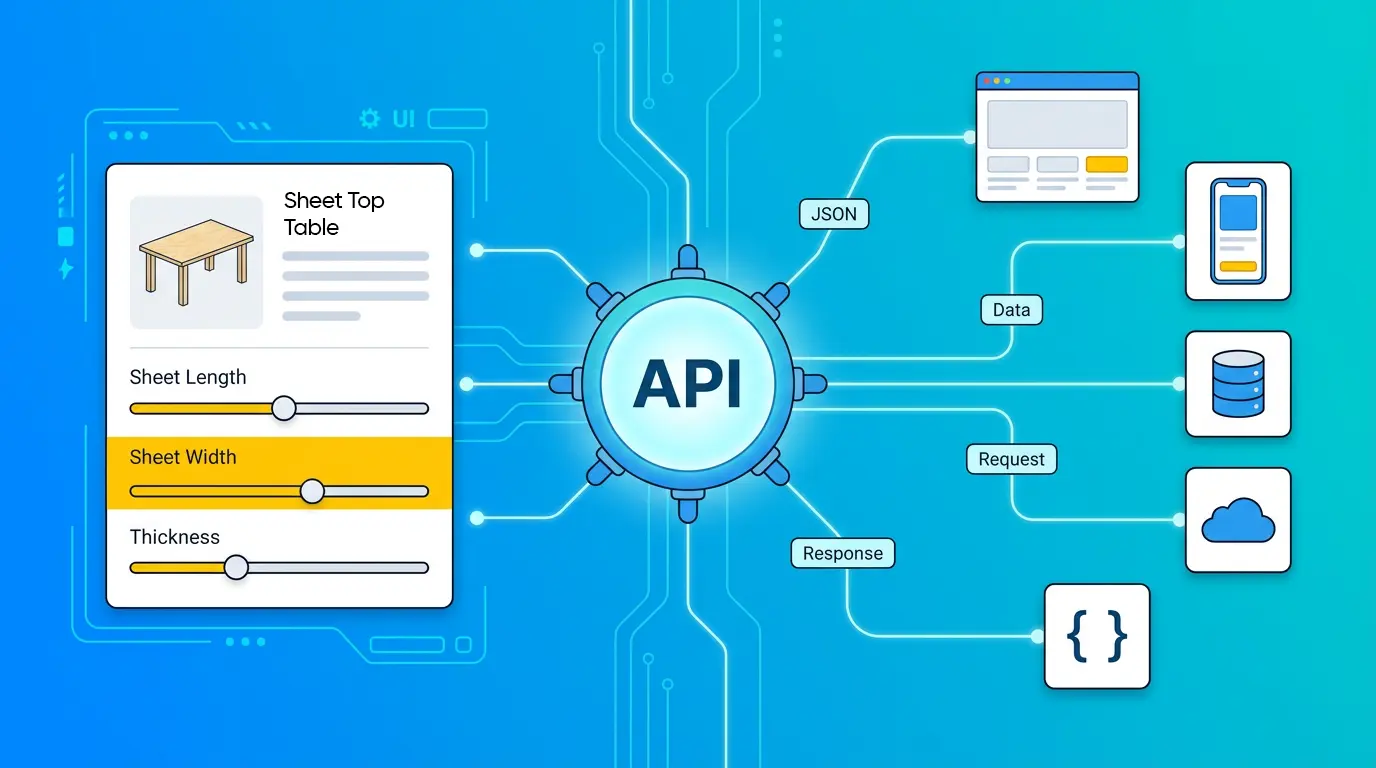
An API-first configurator exposes its complete functionality through programmatic interfaces. Every operation you can perform through the visual configurator — creating a product, setting options, calculating prices, generating production files — is available as an API call. This is fundamentally different from platforms that bolt APIs onto a primarily visual tool as an afterthought.
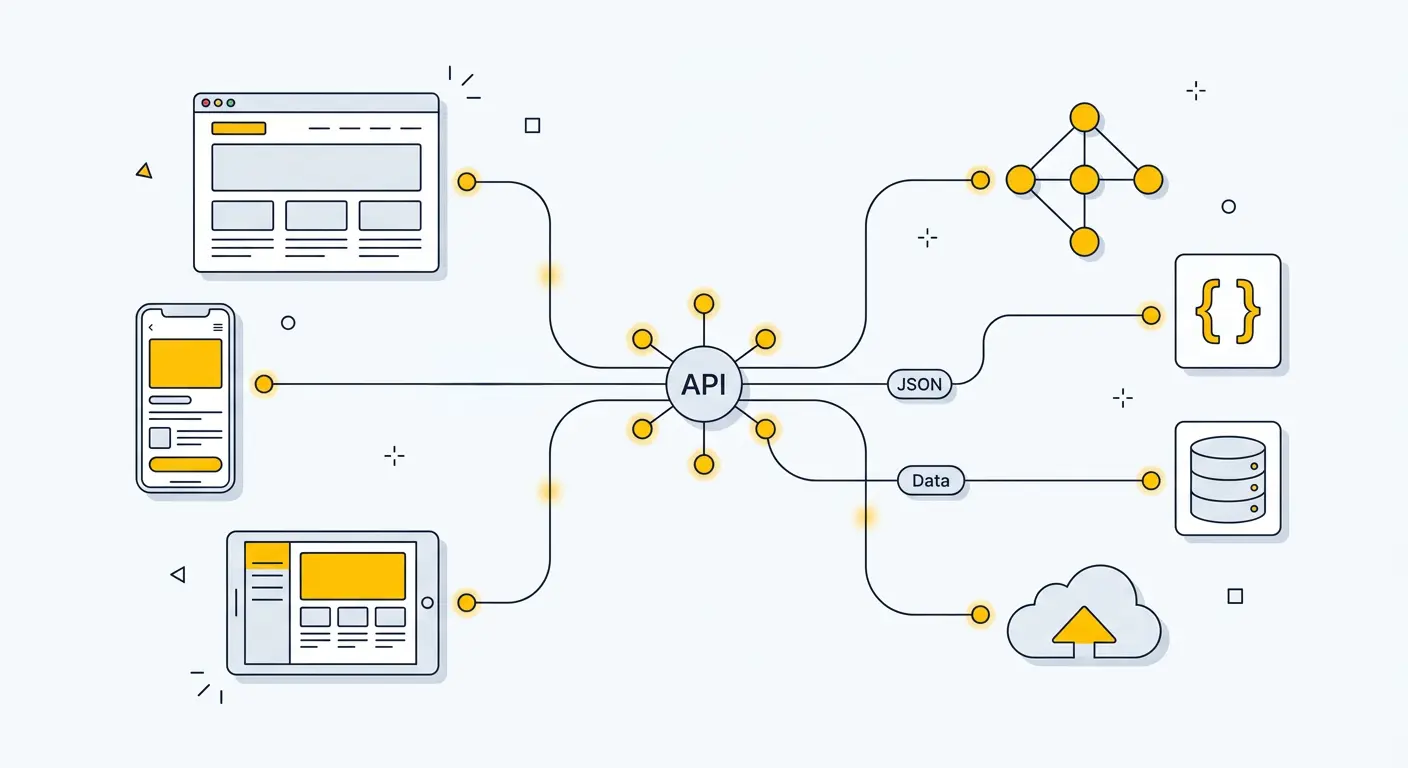
The distinction matters in practice. An API-first platform lets you build a completely custom frontend while using the configurator's parametric engine behind the scenes. It lets your ERP system programmatically create configurations from sales orders. It lets your mobile app access the same product logic as your website. The configurator becomes a service that powers multiple touchpoints, not a widget locked to a single page.
Common Integration Patterns
API-first configurators enable several integration patterns that drive real business value:
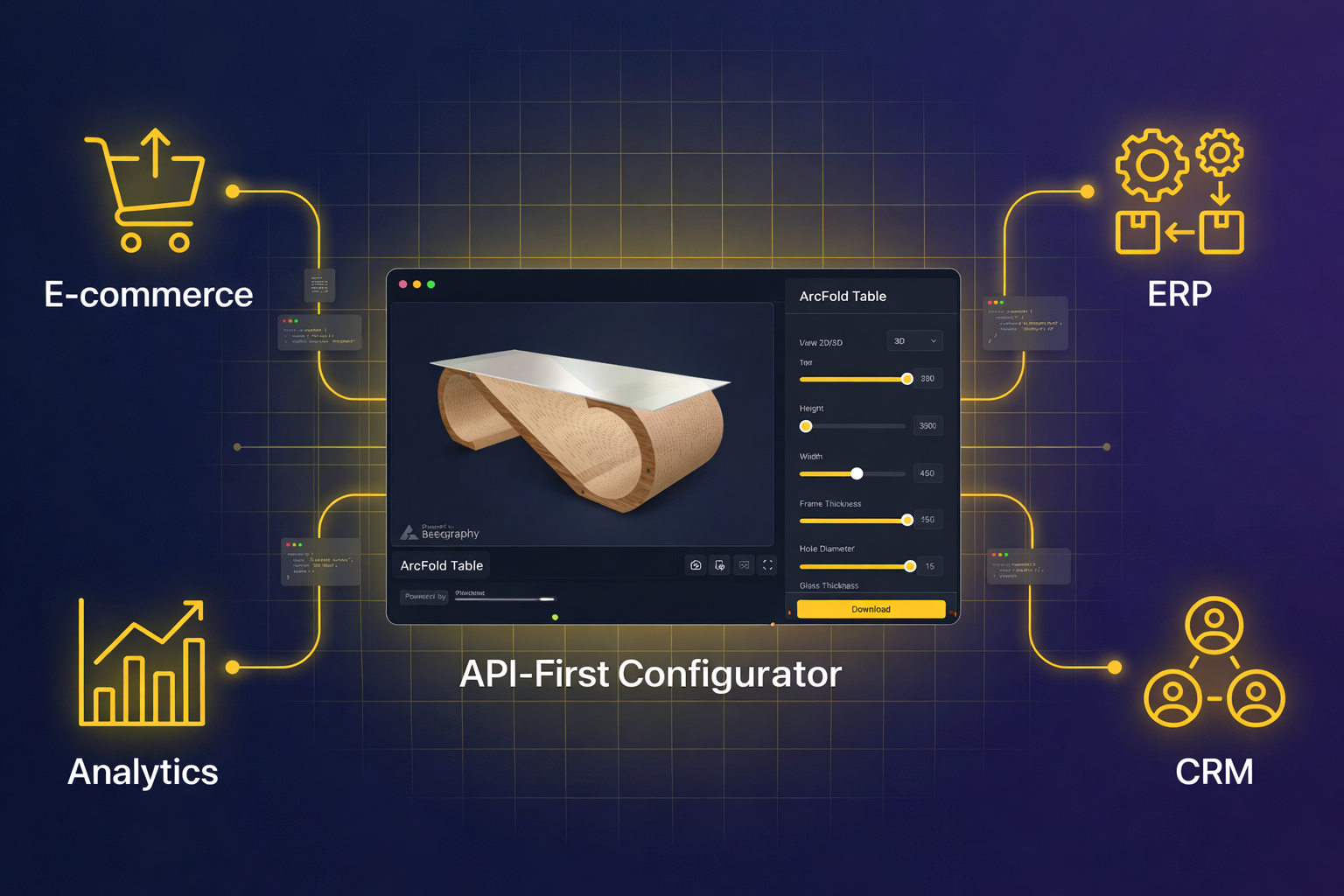
- ERP integration: When a customer completes a configuration, a webhook fires and sends the complete specification — BOM, pricing, dimensions — directly to your ERP system. The sales order is created automatically with every line item populated. No manual data entry, no transcription errors.
- CRM enrichment: Configuration data flows into your CRM, enriching customer profiles with design preferences. Your sales team sees what a lead configured before the first call, enabling more relevant conversations and faster closes.
- PIM synchronisation: Product information management systems stay in sync with your configurator. When you add a new material or update pricing in the PIM, the configurator reflects those changes automatically via API.
- Ecommerce cart integration: Instead of a separate checkout flow, the configurator pushes the configured product into your existing Shopify, WooCommerce, or custom cart via API, maintaining a seamless shopping experience.
Webhooks for Event-Driven Workflows
APIs let you pull data from the configurator. Webhooks let the configurator push data to you. When specific events occur — a configuration is completed, a price threshold is reached, a production file is generated — the configurator sends an HTTP callback to your systems with the relevant data.
This event-driven pattern is essential for automation. A completed configuration webhook triggers: (1) creation of a sales order in your ERP, (2) generation of a confirmation email with the 3D render attached, (3) notification to the production scheduler, and (4) update to the CRM opportunity. All of this happens in seconds without any human intervention. According to MuleSoft's Connectivity Benchmark, organisations with well-integrated systems complete projects 56% faster than those with disconnected tools.
Embed vs API: When to Use Each
Most businesses start with embed integration — dropping the configurator into a webpage via iframe. This is fast and requires no development. But as requirements grow, API integration adds flexibility:
- Use embed when you want the standard configurator UI on your website with minimal development effort. This is ideal for Shopify, WooCommerce, and CMS-based sites.
- Use API when you need a custom UI that matches your brand's design system, when building native mobile apps, when integrating with internal tools (sales configurator, dealer portal), or when building automated workflows.
- Use both when you want the standard configurator on your public website (embed) while also syncing data to backend systems (API). This is the most common pattern for mid-market and enterprise businesses.
The headless commerce approach takes API-first to its logical conclusion: the configurator's visual and logic layers are completely decoupled, allowing maximum flexibility in how and where the configuration experience is delivered.
Authentication and Security
API access to your product configurator must be secure. Look for platforms that support OAuth 2.0 or API key authentication, rate limiting to prevent abuse, IP whitelisting for server-to-server communication, and webhook signature verification to ensure incoming data is authentic. For enterprise deployments, role-based access control (RBAC) ensures that your frontend can read product data but only authorised backend services can create orders or modify pricing.
Building Custom Workflows
The most powerful use of API-first configurators is building workflows that are unique to your business. A design-to-fabrication workflow might automatically: receive a completed configuration via webhook, validate inventory for all BOM components, generate CNC files and upload to the shop floor system, create a shipping label based on product dimensions, and send the customer a production timeline with their 3D render.
These workflows are impossible with embed-only platforms because you cannot programmatically access the configuration data or trigger downstream actions. API-first architecture makes the configurator a composable building block in your technology stack rather than a standalone tool.
How Configurator.tech Supports API Integration
Configurator.tech is built API-first. Every configurator capability — product definition, configuration state, pricing calculation, production file generation — is accessible via REST API. The platform supports webhook subscriptions for event-driven automation, OAuth 2.0 authentication, and comprehensive API documentation. Whether you embed the configurator on your storefront or build an entirely custom frontend, the full parametric engine is available programmatically.
Ready to connect your product configurator to your technology stack? Contact our team to discuss your integration requirements and see the API in action.